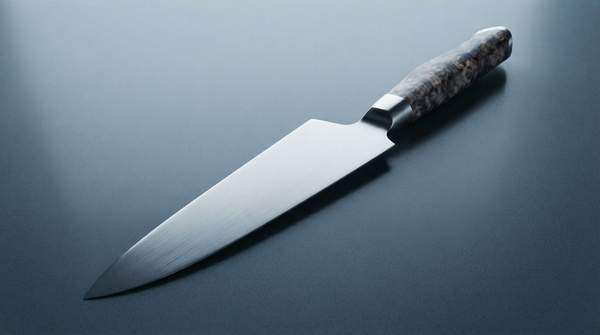
The best chef's knife for a home cook isn't the sharpest one out of the box—it's the one whose blade material, hardness, and handle design match how you cook and how much maintenance you'll tolerate. German knives like the Wüsthof Classic are built around durability and forgiving steel that sharpens easily at home; Japanese gyutos favor hard carbon steel and thin blades that slice with precision but demand gentler treatment; and budget picks like the Mercer Renaissance deliver German-style materials and design at a fraction of the price. Here's how those trade-offs actually work.
Understanding Chef's Knives: German vs. Japanese Philosophies
German and Japanese chef's knives start from opposite assumptions. The German tradition builds a robust blade that can survive heavy chopping, twisting through dense squash, and the occasional careless moment in the sink. Writing at Chris Loves Julia, Chris puts it plainly: "robust German steel is a hallmark of durability, although it does need more frequent sharpening." The Japanese gyuto, by contrast, is thinner and typically made of hard carbon steel, which lets the edge take a much more acute bevel angle and stay sharper longer than German knives, as Wirecutter's Lesley Stockton explains.
That difference in geometry shapes the cutting experience. A gyuto's flatter belly rewards a push-pull motion, where the blade leaves the board and you slice forward or pull back through the food—ideal for paper-thin cuts of vegetables or fish. A softer, thicker German blade trades some of that precision for the ability to power through jobs where finesse matters less. Neither philosophy is superior; they simply optimize for different users.