You don't need a drawer full of gadgets to cook well. In my experience of sorting through expert guidance on kitchen essentials, three tools carry most of the load in a home kitchen: a skillet, a chef's knife, and an immersion blender. But choosing them well requires more than copying someone else's shopping list. The material of your skillet, the steel and balance of your knife, and the attachments on your blender each involve real trade-offs. Here is how to make those choices your own.
Choosing Your Foundational Skillet: Cast Iron vs. Stainless Steel
Start with the skillet, because it is the piece of cookware most likely to be mismatched to the cook. Kendra Adachi, writing for The Lazy Genius, frames the decision exactly right: skillets are built for quick, high-heat cooking that browns proteins beautifully, and "what you need depends on what you cook."
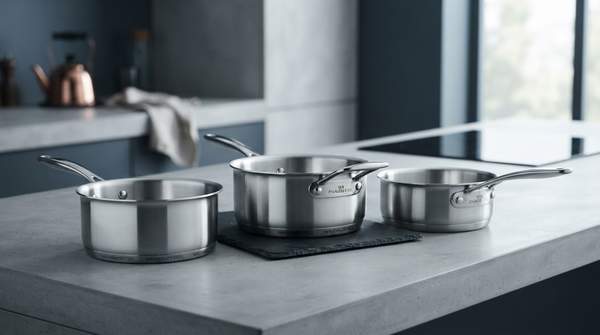
The two most common materials for home cooks split along clear lines. Stainless steel heats up quickly, which is convenient, but Adachi notes it can be "patchy" in holding heat steady and needs a good amount of fat to prevent sticking. Its great advantage is that it is non-reactive: tomato sauce, lemon juice, and wine-based pan sauces are all fair game. Cast iron, by contrast, is fantastic for conducting and holding heat, which is why Adachi calls it "your best friend" for frying chicken or breaded pork cutlets. The trade-offs are weight, reactivity with acidic foods, and maintenance—cast iron demands seasoning and careful cleaning to prevent rust, though with proper care it lasts indefinitely. Stainless steel asks almost nothing of you: no seasoning, and it is generally dishwasher safe.
Notice that neither material wins outright. The right choice depends on whether you sear more than you simmer, and how much upkeep you will realistically do.
Skillet Selection Framework: Matching Cookware to Your Culinary Style
Use this matrix to map your own cooking habits onto each material's documented strengths and weaknesses. Read your two most frequent cooking tasks in the left column, weigh them against the maintenance column, and the material that fits both rows is your answer.
| Consideration | Cast Iron Skillet | Stainless Steel Skillet |
|---|---|---|
| Material properties | Excellent heat retention and durability; heavier; reactive with acidic foods | Lighter; heats faster; non-reactive |
| Cooking performance | Ideal for high-heat searing and a good crust on proteins; less suitable for acidic ingredients like tomato sauce or lemon juice | Good for high-heat cooking and suitable for all ingredients, including acidic ones; heats faster but may not hold heat as consistently for searing |
| Maintenance | Requires seasoning and careful cleaning to prevent rust; with proper care, lasts indefinitely | Generally low maintenance and dishwasher safe; no seasoning required |
| Best fit if you… | Fry chicken or breaded cutlets often and accept upkeep | Cook acidic sauces often and want minimal care |
The reasoning path is straightforward. If your weeknight cooking leans toward searing steaks or frying, cast iron's heat retention rewards you with better crusts—but only if you will maintain the seasoning. If you make pan sauces, deglaze with wine, or simply refuse to baby your cookware, stainless steel's non-reactive surface and low upkeep win, and you compensate for its less steady heat with a bit more fat in the pan.
The Versatile Chef's Knife: Blade Quality and Ergonomic Design
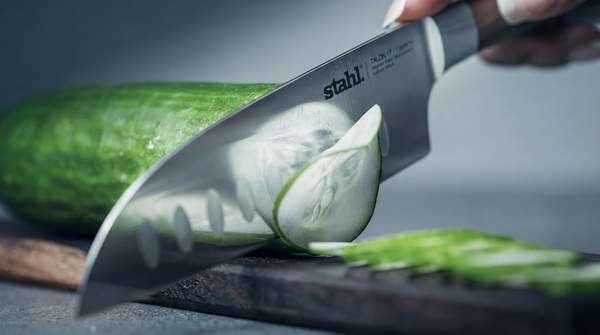
A chef's knife is the cornerstone of kitchen utensils—a versatile tool for slicing, dicing, and a wide range of techniques, as knife maker QSP Knife's buying guide puts it. But versatility is not a brand name; it comes down to two features you can evaluate in any store.
The first is the blade. Writing for The Cooking Guild, Myra Guanzon explains that "the steel used in a knife determines how sharp it can become, how long it holds its edge, and how it behaves during everyday use." High-quality steel "allows the blade to maintain a fine edge without dulling quickly" and "responds well to sharpening, meaning the knife can return to peak performance again and again over its lifetime." That last phrase is the long-term-value argument in a single sentence: good steel is not a luxury, it is what keeps a knife serviceable for decades. Faneema Cutlery's guidance adds that an 8-inch blade offers maximum versatility, with high-carbon stainless steel or Damascus steel as the materials to look for.
The second feature is the handle, and specifically balance. Tara Hohenberger, writing for Chubo Knives, notes that "handle length and material directly affect overall balance. A heavier handle shifts the balance backward, while a lighter handle pushes it forward." A centered balance point gives controlled movements and reduces hand fatigue, which matters most on the days you prep a pile of vegetables. Hold a knife before buying it; if it feels like an extension of your hand rather than a lever fighting you, that is the one.
Immersion Blender: A Multi-Purpose Tool for Modern Kitchens
The third tool is the one most cooks underestimate. An immersion blender earns its place on the essential list, in Adachi's telling, because it removes a genuinely annoying step: "You don't have to worry about pouring hot soup into a blender (or owning a blender at all) and can just stick the immersion blender into your pot and go to town." Blending directly in the pot is the core function, and it is a small revolution for anyone who makes soup regularly.
What turns the device from single-purpose into multi-purpose is its attachments. Mealime's kitchen essentials guide highlights multi-speed all-in-one models that come with a variety of attachments—commonly whisks and choppers—that are ergonomic and easy to clean, and that "turn your immersion blender into an extremely versatile tool." A whisk attachment covers dressings and whipped cream; a chopper handles small batches of herbs or nuts. One motor, several jobs, one small footprint in the cupboard.
Be honest about the limit, though. Adachi's one caveat is that immersion blenders are "not as powerful as, say, a Vitamix," so if ultra-creamy soups or heavy-duty smoothies are your goal, know what you are buying. For everyday soups, sauces, and quick blending jobs, the convenience of working directly in the pot outweighs the power gap.
Making Your Kitchen Investment Count
The decision in front of you is simple to state: invest in foundational kitchen tools by prioritizing material quality, ergonomic design, and multi-purpose utility over quantity or brand names. Three well-chosen tools—a skillet matched to your cooking style, a knife with good steel and honest balance, an immersion blender with useful attachments—will outlast and outperform a counter full of single-task gadgets.
You will know the guide worked when you can check three things: you have identified your preferred skillet material after weighing searing versus acidic cooking and your maintenance tolerance, you can name the blade and handle qualities that make a chef's knife versatile, and you can list the core and attachment uses of an immersion blender. Get those three right, and every purchase that follows becomes a confident, informed decision rather than a guess.
Sources
- The Lazy Genius Guide to Essential Kitchen Tools — The Lazy Genius
- The Ultimate Chef Knife Buying Guide: Find Your Perfect Kitchen Companion — QSP KNIFE
- What Makes a Great Chef Knife? Steel, Balance, and Geometry Explained — The Cooking Guild
- bell — Faneemacutlery
- Why Knife Balance, Weight and Ergonomics Matter — Chubo Knives
- Kitchen Essentials List: 71 of the best kitchen cookware, utensils, tools & supplies — Mealime