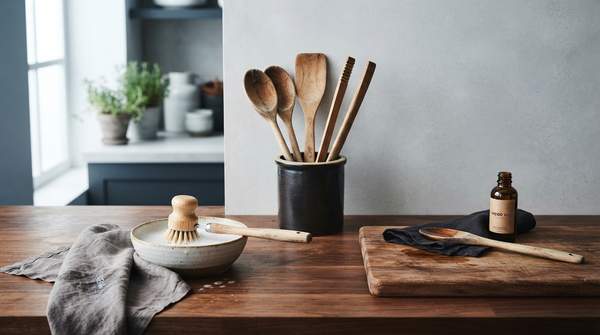
Wooden spoons, spatulas, and cutting boards can last for years, but only if you treat them differently from the rest of your kitchen kit. The routine that works is simple: wash by hand right after every use, dry them promptly, and condition the wood with food-grade mineral oil whenever it starts to look parched. What you avoid matters just as much. Dishwashers, long soaks, and the social media trend of boiling wooden utensils for sanitization all carry real risks of warping, cracking, and splitting, according to manufacturers and cleaning experts.
The Essential Daily Clean: Washing and Drying
Every source I reviewed agrees on the foundation: handwashing, immediately after use. Lancaster Cast Iron's care guide, written by Faith Kennedy, recommends washing by hand with warm water and mild soap after cooking, then drying promptly with a towel and letting the utensil air dry completely. Earlywood, a wooden utensil maker, adds a detail many cooks skip: use the scratchy side of your sponge to actually scrub away residue.
The urgency around drying is not fussiness. Wood is porous, and Earlywood's five-rule care guide warns never to let utensils soak in water, because prolonged exposure swells the fibers and invites damage. Wirecutter's Maki Yazawa makes the same point from the other direction: wooden spoons that get neglected become parched, discolored, or cracked, and you cannot simply "chuck them into the dishwasher and expect them to come out looking brand-spanking-new."
Periodic Conditioning: Nourishing Your Wood
Washing strips a little natural moisture from wood each time, so the second tier of care is replacing it. Totally Bamboo's guide, authored by Madison Lewis, is direct: "The best way to maintain wood or bamboo utensils is to oil them," using a food-grade mineral oil. Oil is what keeps the wood looking good and, more importantly, protects it from cracking.
Here is where expert advice diverges sharply from a common shortcut. NBC Selected's Cory Fernandez, who spoke with multiple cleaning experts for his guide, warns against reaching for the oils already in your pantry. Totally Bamboo echoes this: vegetable, olive, and avocado oils are not recommended because they can go rancid and leave an odor on your tools. Food-safe mineral oil avoids that problem entirely.
How often? Lancaster Cast Iron suggests conditioning monthly or as needed; Earlywood's simpler trigger is "oil liberally when they start to look dry." Either way, the wood itself tells you when it is thirsty.
Occasional Deep Cleaning and Sanitizing
Daily washing handles most hygiene needs, but there are moments when you want more than soap: lingering odors, stubborn stains, or contact with raw meat. Totally Bamboo's guidance points to gentler sanitizing options rather than heat, recommending a vinegar solution or a hydrogen peroxide solution for sanitizing wooden and bamboo utensils.
The key word is occasional. Sanitizing is not part of the daily routine, and treating it as such would expose the wood to unnecessary moisture and chemicals. Reserve it for the situations that genuinely call for it, then follow up with thorough drying and, if the wood looks thirsty afterward, a fresh coat of mineral oil.
Practices to Avoid: Protecting Your Wooden Utensils
The most consequential warning in the current evidence concerns boiling. It has become a popular trend on social media to boil bamboo or wooden cooking utensils, and while boiling does sanitize them, Totally Bamboo cautions that it also strips the wood and can warp it. If you feel the need to do it anyway, the manufacturer advises not doing it often and oiling afterward, but the clearer takeaway is that handwashing with warm water and mild soap remains the best cleaning method.
The other avoid-list is consistent across every source: no dishwashers, which cause warping, cracking, and splitting under their harsh conditions; no soaking, which overexposes wood to water; and no cooking oils for conditioning, which turn rancid. Wirecutter adds a boundary worth stating plainly: heavily damaged or cracked utensils are restoration projects, not cleaning projects, and this guide does not cover them.
Wooden Utensil Care Decision Framework
Use this table to match the utensil's current condition to the right action, rather than applying every treatment on a fixed schedule.
| Condition | Recommended Action | Frequency | Why It Matters |
|---|---|---|---|
| Just used | Hand wash in warm, soapy water; scrub with the scratchy side of a sponge; towel dry, then air dry completely | After every use | Removes residue and limits water exposure, keeping utensils bacteria-free and intact |
| Wood looks dry or pale | Apply food-grade mineral oil or a food-safe wood conditioner | Monthly or as needed | Replenishes moisture and protects against cracking |
| Stained, smelly, or exposed to raw meat | Sanitize with a vinegar or hydrogen peroxide solution, then dry thoroughly | Occasionally, as situations arise | Addresses hygiene concerns beyond routine washing without heat damage |
| Tempted to boil, soak, or use the dishwasher | Don't; stick to handwashing and prompt drying | Always | Boiling strips and warps wood; dishwashers and soaking cause warping, cracking, and splitting |
| Reaching for olive or vegetable oil | Use food-safe mineral oil instead | Whenever conditioning | Cooking oils go rancid and leave odors on utensils |
Maintain and Monitor for Lasting Utensils
Implement a consistent routine of immediate handwashing, thorough drying, and periodic food-grade mineral oil conditioning, while actively avoiding dishwashers, prolonged soaking, and especially boiling. The payoff is visible: utensils remain smooth, free of cracks, odors, and discoloration, indicating proper care and extended lifespan. Check your spoons and boards after each wash; the moment the wood looks dull or feels rough is your cue to oil, not to wait for a calendar date.
Sources
- The Ultimate Care Guide for Wooden Cooking Utensils — Lancaster Cast Iron
- the Ultimate guide to wood utensil care — Earlywood
- How to Clean Wooden Kitchen Spoons — Wirecutter: Reviews for the Real World
- How to Clean and Care for Wooden and Bamboo Utensils — Totally Bamboo
- How to actually get your old wooden utensils clean and looking brand new again — NBC News