When churches begin planning a short-term mission trip, they often start with practical questions: Where should we go? What will we do? How much will it cost? How many people can participate? How will we manage transportation, lodging, meals, and schedules?
Thirst Missions approaches those questions with a broader purpose in mind: creating Christ-centered mission experiences where people can serve, grow in faith, and build meaningful relationships with local churches and communities. Since 2008, Thirst Missions has worked with churches, schools, and groups to create mission experiences built around local partnerships, service, cultural learning, worship, and connection.
That relationship-first approach matters because missions are not simply about completing projects. They are about people.
Service Is More Powerful When People Serve Together
A service project can bring people together quickly.
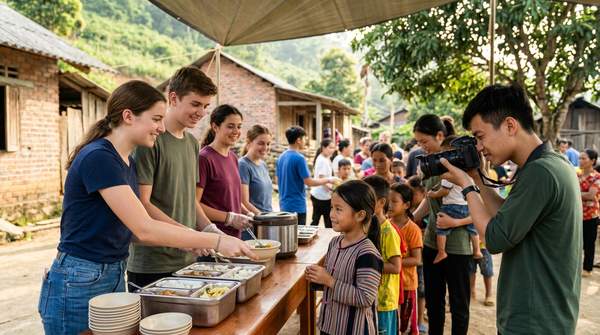
A group may arrive at a local church, community center, home, school, or ministry site with a specific task to complete. Everyone has a role. Some people work with their hands, some interact with children, and others support the project behind the scenes.
But the project itself is rarely the entire story.
Relationships develop through the work.
Participants talk while they serve. They hear stories. They ask questions. They learn about the community. They meet local leaders who have been serving there long before the visiting team arrived.
That changes the experience.
Instead of seeing a community simply as a place where a group comes to complete a project, participants begin seeing individual people, families, churches, and ministry leaders.
That distinction is important.
Local Churches Know Their Communities
Short-term mission groups bring energy, time, resources, and a willingness to serve. Local churches bring something equally important: knowledge of their own communities.
They know the people.
They understand local needs. They know which ministries are already working. They understand cultural expectations and community relationships that visitors may not recognize immediately.
Working through those existing relationships can make a visiting team's contribution more useful and respectful.
Thirst Missions builds its trips around partnerships with local churches and ministries, allowing groups to serve alongside people already engaged in their communities.
For participants, this also creates an opportunity to learn.
Instead of asking only, "What can we do?" a group can begin asking, "What can we learn from the people already serving here?"
That is a healthier foundation for Christian missions.
Relationship-First Missions Help Participants See Beyond the Project
Imagine a student spending an afternoon helping with a community service project.
At first, the student may focus on the task. Finish the work. Help the team. Complete the assignment.
Then someone begins talking.
Maybe a local ministry leader explains why the organization exists. Perhaps a family shares part of its story. A child wants to spend time playing rather than watching the visitors work. A pastor describes what his church has been doing in the neighborhood.
Suddenly, the experience becomes personal.
The project still matters, but the relationship gives the project meaning.
Thirst Missions' mission philosophy emphasizes this kind of relational experience, with opportunities for worship, cultural orientation, ministry partnerships, and guided conversations built into the trip structure.
Participants may remember those human connections long after they forget the details of an itinerary.
Relationship Changes How Students Understand Missions
For youth groups, relationship-first missions can be especially powerful.
Young people are often surrounded by fast-moving digital communication. A mission trip can provide something very different: uninterrupted time with people.
Students eat meals together. They serve together. They talk with ministry leaders. They meet people from different backgrounds. They worship together. They process unfamiliar experiences as a group.
That can challenge assumptions.
A student may discover that someone living in a very different environment shares the same hopes, humor, faith, worries, or desire for friendship.
Those discoveries can make Christian unity feel real rather than theoretical.
Thirst Missions' mission experiences are designed to combine ministry, relationships, spiritual growth, and cultural experiences rather than treating service as an isolated activity.
Relationships Also Strengthen the Visiting Team
The most important relationships on a mission trip are not always between participants and community members.
The team itself can change.
Church members who normally sit in different circles may find themselves working side by side. Students may discover leadership qualities in classmates they barely knew. Adults may see young people from their church respond to challenges with unexpected maturity.
Because everyone is experiencing something together, conversations can become deeper.
A mission trip can create shared memories that strengthen a church community long after the team returns home.
Those relationships can become part of the mission's lasting impact.
A Good Mission Organization Makes Room for Relationships
Creating meaningful relationships requires more than putting people together in the same location.
The schedule has to allow for it.
If every minute is packed with transportation, activities, service projects, meals, and sightseeing, participants may have little time to process what they are experiencing.
A well-designed trip creates a rhythm.
There is time to serve. There is time to worship. There is time to talk. There is time to reflect. There is time to experience the local culture. There is time to rest.
Thirst Missions provides groups with structured itineraries, ministry placements, local partnerships, cultural orientation, staff leadership, and guided evening experiences designed to support that balance.
That organization allows group leaders to spend more energy engaging with their participants instead of constantly solving logistical problems.
Relationship Does Not Mean Ignoring the Work
A relationship-first mission trip is not an excuse to avoid meaningful service.
Quite the opposite.
Relationships can help participants understand why the work matters.
A construction project becomes more meaningful when participants understand the people and ministry behind it. Children's ministry becomes more meaningful when leaders understand the local church's role. Community outreach becomes more meaningful when participants recognize that local partners will continue the work after the visiting group leaves.
Service becomes part of a larger story.
The visiting team contributes for a limited period, while local partners remain connected to the community.
That perspective can help participants approach missions with greater humility.
Missions Can Build Long-Term Partnerships
One of the strongest outcomes of a short-term mission trip is the possibility of an ongoing relationship.
A church may return to the same community in future years. Participants may stay connected with ministry leaders. A group may continue supporting a partner organization from home.
Thirst Missions specifically identifies long-term church partnership opportunities as part of its mission-trip model.
That continuity matters.
When a church returns to a community repeatedly, it can develop a deeper understanding of the local context and build relationships over time.
The goal becomes less about one memorable week and more about participating in something larger.
Choosing a Relationship-Focused Mission Trip
Church leaders considering a short-term mission trip should look beyond the destination.
Ask how the organization works with local churches. Ask who leads ministry activities. Ask how participants learn about the culture. Ask whether the itinerary creates time for conversation and reflection. Ask how the organization prepares groups before they arrive and helps them process the experience afterward.
These questions reveal whether relationships are actually part of the mission model or simply a phrase in promotional material.
Thirst Missions offers private group mission trips in Alaska, Appalachia, Belize, Guatemala, and Puerto Rico, with ministry experiences tailored to each location and group.
Its Youth Collective trips also bring students into shared mission experiences in Nashville and New Orleans, combining ministry, relationships, spiritual growth, and community.
The locations may differ, but the underlying principle remains consistent.
Christian missions are ultimately about people.
The Relationships May Be What You Bring Home
A mission trip can end when the group leaves the airport.
The relationships do not necessarily end there.
Participants may return home thinking about a pastor they met, a child they spent time with, a family who welcomed them, or a fellow team member they came to know in a completely different way.
Those memories can become reminders of faith in action.
They can inspire another conversation, another service opportunity, another mission trip, or simply a different way of seeing the people around us.
That is the power of relationship-first missions.
The work matters. The destination matters. The planning matters.
But people are at the center.
When churches approach missions with a willingness to serve, listen, learn, and build genuine relationships, a short-term trip can become something much deeper: a shared experience of faith that strengthens both the people who go and the communities they are privileged to serve.