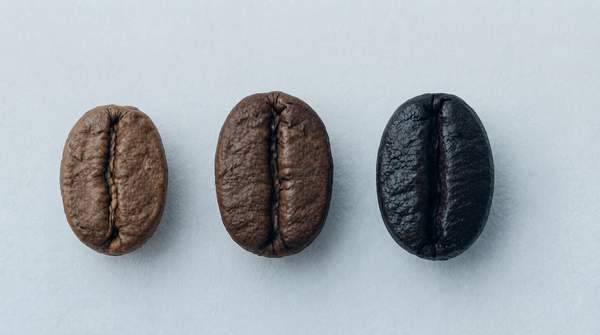
If you want a bright, fruity, acidic espresso, reach for a light roast and plan to grind finer and brew hotter. If you want a bold, bitter, heavy shot, a dark roast with a coarser grind and cooler water will get you there. The reason is chemistry: the longer beans roast, the more soluble they become, and solubility—not just taste—determines how your grinder, ratio, and temperature should be set. This guide explains what actually happens inside the bean as it roasts, then gives you a starting recipe for each roast level.
The Roasting Journey: From Green Bean to Flavorful Roast
Roasting transforms raw green coffee into something we can actually taste. In its unroasted state, coffee is dense and, as Methodical Coffee puts it, "nearly indigestible, and locked away from our senses." Roasting changes both the chemical and physical properties of the bean, influencing aroma, body, acidity, bitterness, and—critically for espresso—solubility and extraction performance.
The flavor compounds themselves originate in the bean: as Clive Coffee's Sean Jemison explains, coffee's flavor compounds are "already ingrained in the beans based on environmental factors and the selected processing methodology." The roaster's job is to manipulate time and temperature to shape how those compounds are expressed. Two major chemical processes drive this transformation: the Maillard reaction and caramelization, which convert the bean's sugars and acids into the hundreds of compounds that create aroma and taste. These reactions are fundamental to flavor creation, though the specific compounds produced vary with how far the roast is pushed.
The key trade-off is between origin flavor and roast flavor. Lighter roasts preserve the character the bean acquired from its terroir and processing; darker roasts progressively replace that character with flavors created by the roasting process itself—caramel, chocolate, smoke, and eventually char.