The short answer: no single fitness tracker wins on both precision and wearability, so your choice comes down to which you value more. If you want the most accurate HRV numbers, a chest strap is the gold standard—but almost nobody sleeps in one. If you want reliable, long-term sleep and HRV trends, a smart ring or watch you actually wear every night beats a precise device that lives in a drawer. Here is how the technology and form factors trade off, and how to decide.
Introduction: The Accuracy vs. Convenience Dilemma in Health Tracking
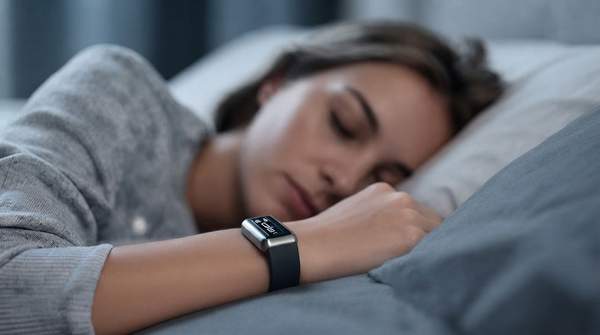
Heart rate variability—the variation in time between successive heartbeats—can now be tracked by most smart devices, and it is increasingly used alongside sleep data to understand stress and recovery. A review of wearable HRV measurement notes that unlike physician-prescribed monitors offering only short-term recording, smart devices can provide long-term monitoring across exercise, sleep, and rest, yielding valuable datasets that help establish baseline heart function variables and evaluate how they vary across scenarios. That framing sets up the central dilemma: the devices best at capturing a single, precise measurement are rarely the ones you will wear around the clock. Sleep tracking in particular demands overnight wear, night after night, which reshuffles the priorities entirely.
Understanding Sensor Technology: ECG vs. PPG
Two methods dominate consumer heart tracking. ECG records the heart's electrical activity directly: on smartwatches such as the Apple Watch and Samsung Galaxy, a single-lead ECG uses one electrode on the back of the watch and one at the digital crown, requiring you to touch the crown with a finger from the opposite hand to capture a reading. That makes watch ECG a deliberate, spot-check measurement rather than a continuous stream. PPG, or photoplethysmography, works differently: it measures blood volume changes in the capillaries using light, which allows passive, continuous estimation of heart rate and HRV from the wrist or finger.
A comparison guide from MindSpire reports that wrist-worn PPG devices typically achieve an 85–95% correlation with ECG measurements under ideal conditions—good enough for trends, but with absolute values that can drift. Accuracy also varies by device, placement, and each manufacturer's proprietary algorithms.
Chest Straps: The Gold Standard for Precision
Chest straps detect the heart's electrical signals directly, and MindSpire's guide reports accuracy within ±1–2 milliseconds of laboratory ECG. For HRV, where millisecond-level timing is the whole measurement, that precision is unmatched. The trade-off is comfort: while modern straps use soft fabrics and minimal profiles, wearing a chest band 24/7 remains impractical for most users, according to the same guide. Its form factor can interfere with sleep and daily activities. That is why athletes and biohackers typically use chest straps such as the Polar H10 for morning HRV readings or specific training sessions where accuracy matters most—not for overnight sleep tracking. Battery life is rarely the limiting factor here; wearability is.