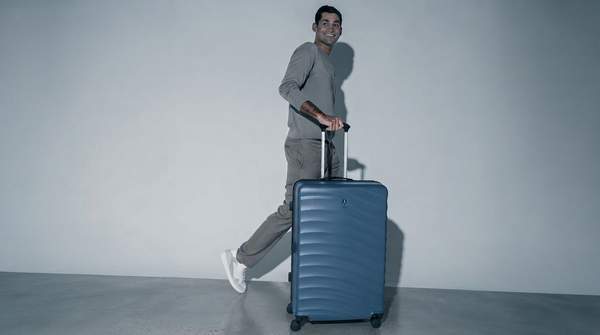
Most checked-baggage problems fall into a handful of predictable categories: overweight fees, confiscated items, damage, and delayed or lost bags. The fixes are mostly procedural, not luck. Follow a three-stage checklist — pack the right contents, prepare the bag itself, and handle check-in deliberately — and you eliminate the most common and costly errors before you reach the counter.
The Pre-Flight Checked Luggage Checklist: Avoid Common Mistakes
The single biggest mistake travelers make is treating checked luggage as a catch-all container. Rules from the Federal Aviation Administration restrict what can go in the hold, airlines enforce their own weight and size allowances, and mishandling — while not the norm — is disruptive enough that you should never check anything you can't afford to lose for a day or two.
The checklist below organizes prevention chronologically, because each stage catches different mistakes. Packing errors are regulatory: put a spare lithium battery in a checked bag and security can confiscate it. Preparation errors are financial and physical: an overweight bag triggers fees at the counter. Airport errors are procedural: skipping the baggage claim desk can cost you a refund you're legally owed.
Your Pre-Flight Checked Luggage Checklist
Work through these stages in order before a long American route. Each item addresses a documented failure point.
| Stage | Action | Mistake it prevents |
|---|---|---|
| Stage 1: Packing contents | Keep valuables, medications, phone charger, and essentials in your carry-on, not the checked bag | Loss of irreplaceable items; being stranded without medication if the bag is delayed |
| Stage 1: Packing contents | Move devices with lithium batteries — laptops, phones, tablets, cameras — to carry-on; never pack spare lithium batteries, power banks, e-cigarettes, or vaping devices in a checked bag | Security confiscation; fire risk in the hold where crews can't respond quickly |
| Stage 1: Packing contents | Check aerosols: only medicinal or toiletry aerosols (capped securely) may fly; spray paint, air freshener, and cooking spray are prohibited | Confiscation or a bag pulled at screening |
| Stage 2: Preparing the bag | Weigh the suitcase at home with a luggage scale and pack under your airline's allowance, not right at the limit | Overweight fees at the counter |
| Stage 2: Preparing the bag | Roll clothes instead of folding; use packing cubes; place heavier items like shoes along the wheel base; fill shoes with socks and small accessories | Overstuffed, overweight, and tip-prone bags |
| Stage 2: Preparing the bag | Place a Bluetooth tracker inside, confirming its battery meets FAA lithium limits | Being unable to locate a mishandled bag |
| Stage 3: At the airport | Verify your airline's specific weight, size, and battery policies before you leave for the airport — carriers can be stricter than FAA baselines | Surprise fees and gate-side confiscations |
| Stage 3: At the airport | If the bag is delayed or lost, file a baggage claim report with the airline at the airport before leaving | Losing your right to a mandatory fee refund |
Stage 1: Packing Your Items – What to Pack (and What Not To)
The FAA's PackSafe rules draw a sharp line between batteries installed in devices and spare batteries. Devices containing lithium metal or lithium-ion batteries — laptops, smartphones, tablets, cameras — should be carried in carry-on baggage, where flight crews are trained to recognize and respond to battery fires. Spare lithium batteries, portable rechargers, e-cigarettes, and vaping devices are prohibited in checked baggage outright and must travel in carry-on, protected from short circuits.
Quantity limits matter too. The FAA caps larger spare lithium-ion batteries at two per person, and many airlines impose stricter limits on power banks regardless of watt-hour capacity — check with your carrier before flying. Damaged, defective, or recalled batteries must not fly at all, in either bag. And don't assume prohibited means obvious: Allianz's packing guidance notes that while a cleaver can be checked, most aerosols cannot — only medicinal or toiletry aerosols with secure caps are permitted.
Stage 2: Preparing Your Suitcase – Weight, Labeling, and Security
Weight is the most avoidable fee. Luggage retailer Lugg's editorial advice is to weigh your bag at home before leaving and aim under your airline's allowance rather than right at it. Wearing your heaviest items — boots, a thick jacket — to the airport can free up meaningful capacity without repacking.
Inside the bag, rolling clothes rather than folding flat reduces creases and saves space, and packing cubes compress contents while keeping items grouped. Position heavier items like shoes and toiletry bags along the wheel base so the weight sits low when the bag is upright. Finally, drop in a Bluetooth tracker: AirTags and similar devices are legal in checked bags as long as they stay within the FAA's lithium limits — lithium content up to 0.3 grams, or lithium-ion batteries up to 2.7 watt-hours. Common coin-cell models meet those thresholds, but check your specific tracker's battery type.
What to Do When Things Go Wrong: Mishandled Baggage Guide
If your bag doesn't arrive, the most important step happens before you leave the airport: file a baggage claim report with the airline. Under a Department of Transportation rule in force since October 28, 2024, if your bag is delayed 12 hours or more, the airline must refund the checked bag fee you paid — but the refund clock only starts once that report is filed. Without the report, the refund never triggers.
On multi-carrier itineraries, the report must be filed with the last operating carrier at your destination — not the airline you started with. A Bluetooth tracker helps you and the airline locate the bag faster, since you can point to its last known position. Note the boundary of the refund: it covers the fee itself. Clothes and toiletries you buy while waiting are a separate claim under airline policy.
Actionable Steps for Mishandled Luggage
If your checked bag is delayed or lost, immediately file a baggage claim with the airline at the airport before leaving, and track your bag using a Bluetooth device if available. Your success measure is concrete: confirmation of a filed baggage claim report and, if applicable, a refund for checked bag fees. This guide covers U.S. domestic rules, isn't legal advice, and can't guarantee claim outcomes — airline-specific weight limits, fees, and battery policies vary, so verify with your carrier before you fly.
Sources
- PackSafe - Portable Electronic Devices Containing Batteries — FAA
- PackSafe - Lithium Batteries — FAA
- 13 Things Handlers Wish Travelers Knew Before Checking a Bag on a Long American Route — Yahoo Travel
- 7 Airport Packing Mistakes to Avoid & What to Do Instead — Lugg | Travel Bags, Suitcases & Accessories
- Airline Passengers and Batteries — FAA
- Lithium Batteries in Baggage — FAA
- 20 Things You Should Never Pack in Checked Luggage — Allianztravelinsurance