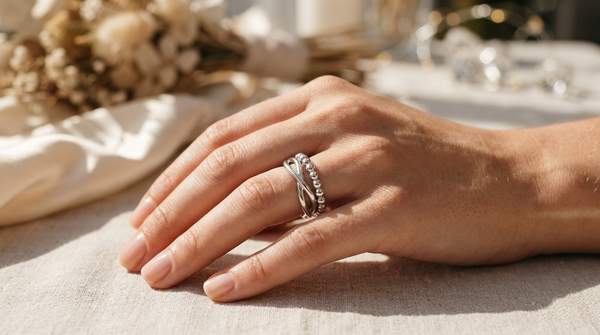
Your wedding band may be the first ring you choose to wear every day, but it doesn’t have to be the last one you add to the combination. An anniversary, a personal milestone, or simply a change in taste can bring another ring into the picture. The first band becomes part of a look that grows with you.
Ritani offers stackable wedding rings that make room for that kind of personal styling. From delicate metal bands and diamond accents to chevron shapes and textured designs, the collection gives you options for a wedding ring that feels complete now and can take on another appearance when you add to it later.
Choose a First Band You’ll Love Wearing Alone
A wedding-ring stack begins with a band you genuinely want to wear. Even if you already imagine adding another ring for your first anniversary, the initial choice should feel satisfying on its own and alongside your engagement ring.
A simple metal band can be a beautiful foundation because its uninterrupted surface gives neighboring rings room to introduce texture or diamonds. Ritani’s Women’s Open Twist Wedding Ring offers a different starting point, bringing movement into the band itself through its twisted design.
For someone drawn to decorative detail, the Women’s Ribbon Wedding Ring provides another direction. Its ribbon-inspired curves and floral accents create an ornamental look that can complement a coordinated bridal set.
There’s no requirement to begin with the plainest possible ring. A decorative first band can establish the personality of the stack, while later additions can support its shape or introduce a contrasting detail.
The question worth answering is whether you would still enjoy wearing that first ring when the rest of your jewelry changes. A band with a strong individual identity gives you something to build around rather than a piece that depends on additional rings to feel finished.
Give Your Wedding Ring Stack a Shape
The profile of a wedding band affects the appearance of the entire combination. Straight, curved, and chevron designs create different outlines, so the first ring can influence how you approach the next addition.
Ritani’s stackable wedding-ring collection includes several styles that give these choices a more concrete form.
Straight Bands Create a Continuous Line
A straight wedding band introduces an uninterrupted horizontal outline beneath or beside another ring. When several straight bands are worn together, the combination can emphasize the contrast between their widths, metals, and surface details.
Ritani’s Women’s Beaded Stackable Wedding Ring gives this familiar shape a decorative treatment. Its beaded design adds texture without relying on a row of diamonds, making it an interesting companion to a smoother band.
Imagine a polished gold wedding ring with a beaded band added for an anniversary. The two designs share a consistent metal color while bringing different surface details into the combination.
Chevron Bands Add a Point of Interest
Chevron wedding rings introduce a V-shaped profile that changes the outline of a stack. Depending on the neighboring ring, that point can create a more angular composition than a combination built entirely from straight bands.
Ritani’s Women’s 0.17 CTW Double Chevron Lab-Grown Diamond Wedding Ring makes the shape prominent through its double-chevron design. The two angular lines give the ring a distinct identity, even before another band enters the arrangement.
For a more intricate diamond treatment, Ritani also offers the Women’s 0.38 CTW Marquise & Round Lab-Grown Diamond Chevron Wedding Ring. The combination of elongated marquise shapes and round diamonds introduces visual variation along the angled band.
Both designs can contribute to a developing stack, but they produce different effects. One emphasizes the repeated chevron outline, while the other brings additional interest through the shapes of its diamonds.
Contour Bands Follow a Softer Direction
Contour wedding bands introduce a curved profile that can complement the shape of an engagement ring or another band. Their silhouette offers another way to develop a stack without repeating the same straight outline.
Ritani’s women’s wedding-ring selection includes contour designs in different widths, giving you options for the amount of visible metal you want beside an existing ring.
The exact arrangement will depend on the dimensions and settings of the individual pieces. When considering a particular combination, pay attention to how the rings sit together as well as how their outlines look from above.
Decide How Metal and Diamonds Will Share the Space
Once you have a preferred band profile, metal and diamond placement can determine how the combination develops.
Ritani’s stackable wedding rings include options in white gold, yellow gold, rose gold, and platinum, depending on the design. The collection also includes plain metal styles and bands featuring natural or lab-grown diamonds.
Matching metals can create continuity between rings with different designs. A yellow-gold band beside another yellow-gold piece, for example, allows differences in texture or diamond arrangement to become the more prominent styling feature.
Mixing metals creates another possibility. A white-gold diamond band can introduce a cool-toned contrast beside a yellow-gold wedding ring, giving each piece a more distinct visual role.
Diamond placement deserves consideration, too. A band with a continuous line of small diamonds will create a different impression from one featuring alternating stone shapes or a more pronounced geometric design.
The developing stack might combine a smooth band with a decorative diamond ring, or a textured band with a polished metal piece. Ritani’s range gives you several ways to balance the appearance without making every addition compete for attention.
Make the Next Ring Worth Adding
An anniversary is a natural occasion to add another band, but a wedding-ring stack can also mark other personal milestones. The new piece might commemorate a significant year, celebrate an achievement, or simply reflect a style you’ve grown to love.
Ritani presents its stackable wedding rings as options that can be mixed, matched, and added to over time. The collection also includes engraving services, creating another opportunity to personalize a ring for a meaningful occasion.
Consider a stack that begins with a simple wedding band and gains a diamond chevron ring for a later anniversary. The original ring continues to represent the wedding, while the newer piece brings a different design and its own significance.
Another combination might begin with an ornamental ring and gain a simpler band later. That addition can change the balance of the arrangement while allowing the first ring to remain the focal point.
You don’t need to select every future piece when purchasing your wedding band. Knowing the design direction you enjoy gives you a useful starting point, while leaving space for your tastes and occasions to influence what comes next.
Keep the Finished Combination Comfortable and Personal
As you add rings, the amount of space they occupy on your finger becomes part of the selection. Several slender bands may create a different wearing experience from a stack that combines wider, more sculptural designs.
The proportions of the rings also affect their visual balance. A substantial engagement ring may call for a different accompanying arrangement from a delicate solitaire, especially when you want the individual pieces to remain recognizable.
Ritani’s wedding-ring product details include information such as ring size, metal, and width, helping you compare specific designs. Those details are useful when considering how an additional band will relate to pieces you already own.
Your preferred arrangement may also change from one occasion to another. Wearing the wedding band alone during the day and adding another ring for an evening event can give familiar jewelry a different appearance without replacing the pieces you love.
A developing stack offers that freedom. Each new ring adds another option to your collection, while the original wedding band remains part of the combination.
Frequently Asked Questions
What types of stackable wedding rings does Ritani offer?
Ritani offers stackable wedding rings in several designs, including simple metal bands, textured styles, chevron rings, and diamond-accented options. The collection includes different precious metals and natural or lab-grown diamond designs, depending on the individual ring.
Can I wear a Ritani stackable wedding band by itself?
Yes, Ritani’s stackable wedding rings can be worn individually or combined with other rings. Choosing a design you enjoy on its own gives you flexibility as your jewelry collection develops.
Can I combine different metal colors in a wedding-ring stack?
Yes, Ritani presents mixed-metal combinations as one way to personalize stackable wedding rings. You might combine yellow gold with white gold or introduce rose gold alongside an existing band, depending on the metal options available for your selected designs.
How do I select another band to wear with an existing engagement ring?
Begin by comparing the profile, width, and design of your engagement ring with the Ritani wedding bands you’re considering. A straight, contour, or chevron band can create a different arrangement, and the individual rings’ dimensions will influence how they sit together.
Are Ritani stackable wedding rings suitable for anniversary gifts?
Yes, Ritani identifies stackable wedding rings as options for anniversaries and other significant occasions. Adding a diamond band, a different metal color, or an engraved ring can give the existing combination a new personal detail.
Start With a Band That Can Grow With Your Style
A wedding-ring stack can begin with one thoughtful choice and develop through the years. Whether your preference is a smooth metal band, a textured design, or a diamond chevron, the first ring can establish a look that welcomes future additions.
Choose from Ritani’s stackable wedding rings to find a band you’ll enjoy wearing now and incorporating into new combinations as your jewelry collection grows.