The cheapest razor to buy is almost never the cheapest razor to own. A cartridge system runs $15–$30 up front, but its proprietary refills—$2–$5 each, lasting roughly a week of daily shaves—make it the most expensive option over time. A double-edge safety razor demands more patience and a better handle ($50–$100 for a quality starter), yet its blades cost pennies. A straight razor offers the lowest consumable cost of all, but only if you commit to stropping before every shave and honing on whetstones once or twice a year. The right choice depends on which of those trade-offs fits your mornings.
Understanding Your Shaving Priorities: Cartridge, Safety, or Straight?
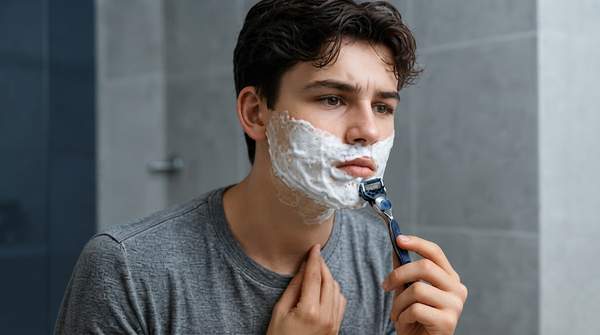
Cartridge razors are, by a wide margin, the most common razors sold today: three to six blades mounted in a pivoting, non-recyclable disposable head. They are engineered around convenience—easy to learn, fast for daily shaves, and travel-friendly. That design philosophy is also their weakness, since the refills are proprietary and priced accordingly.
Safety razors replace the multi-blade cartridge with a single double-edge blade held in a protective guard. Straight razors go further still: one exposed carbon steel blade that you sharpen and maintain rather than replace. Sean McManus, writing for specialty retailer Carbon Shaving Co., frames the whole decision as a set of trade-offs in closeness, comfort, maintenance, and long-term cost—and those trade-offs are what the rest of this comparison unpacks.
Initial Investment vs. Long-Term Savings: A Cost Breakdown
The Razor Company's cost analysis puts the total initial investment for wet-shaving at $15–$30, with double-edge blades running $0.10–$0.30 each and lasting about four to five shaves. Cartridges, by contrast, cost $2–$5 each and last roughly a week of daily use. Add shaving soap or cream to either routine—$10–$20 for a supply lasting four to six months—and the annual math tilts decisively.
Nathan Gareau of Kent of Inglewood, a traditional shaving retailer, prices the safety razor path at $50–$100 for a quality starter handle and $400–$2,500 for a lifetime of blades, depending on brand and shave frequency. The straight razor path inverts the ratio: $300–$500 for a top-notch razor, $100–$200 for a solid leather strop, $20 per professional honing, or $200–$400 for a decent set of lifetime stones. The hardware is the expense; the consumables approach zero.
CNN Underscored's testing team makes the same point from the consumer side: safety razors "cost almost nothing after the initial investment, as replacement blades can be bought in bulk at a fraction of the price of new carts." The cartridge razor's low entry price is, in effect, a financing plan for its refills.