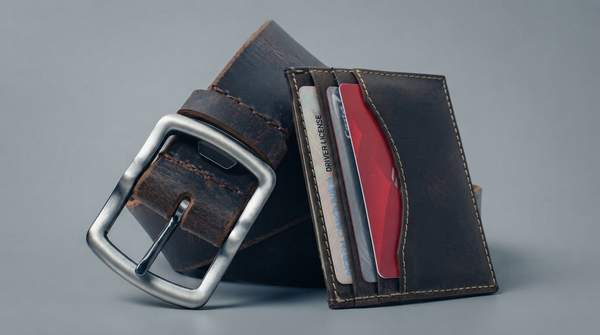
Leather goods are sold under four principal grades—full-grain, top-grain, genuine (split), and bonded—and the differences between them are structural, not cosmetic. Full-grain leather, cut from the outermost layer of the hide and left intact, is the most durable and develops the richest patina; bonded leather, a composite of PVC and fibre that may contain as little as 20% leather, de-laminates and falls apart. Understanding which layer of the hide a product comes from lets you predict, before purchase, whether a wallet or belt will improve over decades or crack within a few years.
The Foundation: Understanding Leather's Structure
Every grade of leather begins as the same animal hide, and the grading system reflects where in that hide a given piece comes from. As leatherworker Ryan Popoff of Popov Leather explains, tanneries shear the hide into cuts: the top cut contains the full grain of the hide and becomes the highest-grade products, while the bottom cut supplies the lower grades. This single split determines nearly everything that follows—durability, appearance, breathability, and how the material responds to years of handling.
One caution belongs at the outset: there is no official standard for grading leather, as Popoff's guide notes. The terms are industry conventions rather than regulated definitions, which is precisely why marketing language can be misleading. A label reading "genuine leather" sounds like an assurance of quality; in practice, as we will see, it usually signals the opposite.