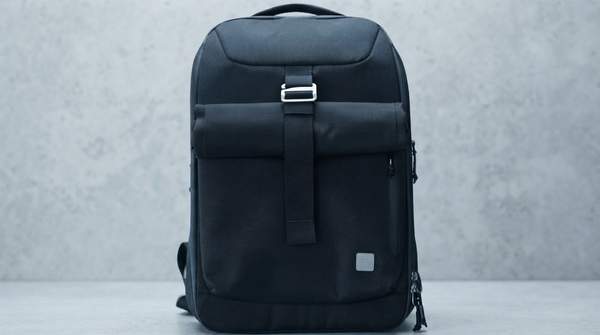
For those seeking an everyday carry (EDC) backpack built to withstand the rigors of urban life, understanding the fundamental differences in materials and construction is paramount. The longevity and weather resistance of a backpack are not merely a function of its brand or aesthetic, but rather a direct consequence of its primary fabric denier, zipper type, and the reinforcement techniques employed during its assembly. These elements collectively dictate the backpack's durability, its ability to repel water, its overall weight, and ultimately, its cost.
Discerning consumers must navigate a landscape of material claims, recognizing that a higher denier count does not always equate to superior performance for typical urban use, and that advanced materials often come with a premium. The Matador Equipment company, for instance, emphasizes that while high denier materials like 1000D Cordura are suitable for military applications, a well-built bag with 420D fabric is unlikely to fail from normal abrasion. This suggests that the "total package" of construction, reinforcement, and hardware quality often outweighs the singular focus on fabric weight.
Fabric Denier and Longevity: Cordura vs. X-Pac
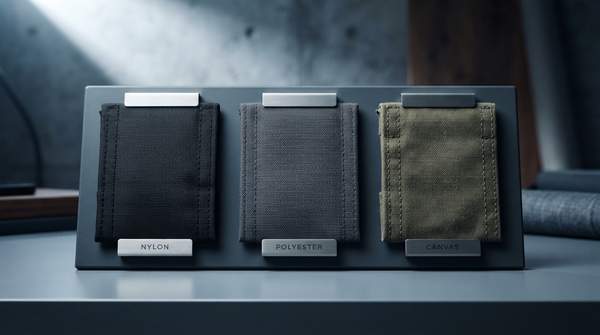
The choice of primary fabric significantly influences an EDC backpack's resistance to abrasion, tearing, and overall lifespan. Two prominent materials often considered for durable packs are Cordura nylon and X-Pac laminate, each presenting distinct characteristics and trade-offs.
Cordura, particularly in deniers ranging from 420D to 500D, offers robust abrasion resistance suitable for everyday wear and tear. While 1000D Cordura is exceptionally tough, it can be overkill for most travel or EDC applications, adding unnecessary weight. A well-designed bag constructed with 420D high-quality nylon can provide years of service, as noted by Matador Equipment. Cordura's durability stems from its proven weave of strong 6.6 nylon, and it is generally a cost-effective option. However, its weather resistance primarily relies on a Durable Water Repellent (DWR) coating on the face fabric, which will eventually wear off, leading to water absorption over time, according to a discussion on Backpacking Light.
X-Pac, an advanced laminate fabric, is often lauded for its weight savings and superior waterproofing. Its construction typically involves multiple layers, including a durable face fabric, a polyester X-Ply yarn for bias stability and tear strength, and a waterproof film. While the laminated structure provides excellent waterproofing, the face fabric itself can be thinner and potentially less durable than a Cordura of comparable weight, as observed in a Backpacking Light forum discussion. Like Cordura, X-Pac also features a DWR coating on its face fabric that will wear off. Despite this, its laminated design ensures superior water resistance even after the DWR diminishes. X-Pac is generally a more expensive material due to its advanced construction.