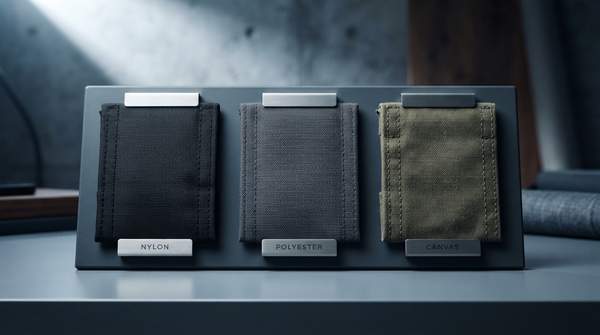
Choosing the right material for a backpack is a pivotal decision that profoundly influences its durability, performance, and long-term value. While a plethora of options exist, nylon, polyester, and canvas stand out as primary contenders, each offering a distinct profile of strengths and weaknesses. Understanding these differences—from resistance to abrasion and tearing to water and UV exposure, alongside cost and weight considerations—is essential for making an informed selection tailored to specific use cases, whether for daily commutes, rugged outdoor adventures, or casual fashion.
The material choice is fundamental to a backpack's longevity and user satisfaction. A bag that fails prematurely represents a broken promise, whereas durable materials like Ballistic Nylon or Cordura® build long-term trust, leading to positive user experiences. Beyond sheer toughness, the material's weight directly impacts comfort, making lightweight options like Ripstop Nylon crucial for hiking, while standard polyester might suffice for a school bag. The ultimate goal is to match the material's inherent properties with the intended daily use and expected environmental stressors.
Nylon: The High-Performance Synthetic
Nylon is widely recognized as a high-performance synthetic fiber, celebrated for its exceptional strength and resilience. It consistently demonstrates superior abrasion resistance, in some comparisons outperforming polyester by 30-50% due to its tightly woven fiber structure. This characteristic makes nylon an ideal choice for heavy-duty applications where constant friction is anticipated. Furthermore, nylon generally exhibits superior tear strength; for instance, a 1050D PU coated Nylon can withstand more than double the force of a 600D Polyester, according to one test result, though specific weave patterns and coating thickness can influence actual performance.
Beyond its mechanical strength, nylon offers high water resistance, particularly when treated or coated with materials like polyurethane (PU) or a durable water repellent (DWR). This makes it a preferred material for outdoor gear and tactical bags where moisture protection is critical. However, nylon does have a notable disadvantage: lower UV resistance. Prolonged exposure to sunlight can cause it to fade and weaken over time, a common issue for nylon in direct sunlight. Despite this, its overall durability and strength make it a popular choice for heavy-duty backpacks, often used in military and high-performance designs.