The difference between a commuter backpack that survives years of daily trains, bike lanes and rain, and one that frays at the seams by its second winter, is usually written right on the spec sheet — if you know how to read it. Terms like "1680D ballistic nylon," "Cordura," "YKK zippers" and "Duraflex hardware" are not marketing noise; each points to a specific, verifiable construction choice. This guide deconstructs those terms, then shows how a few well-regarded commuter packs — including the Aer City Pack 2 and the Evergoods Civic Panel Loader 24L — put them into practice, so you can judge any bag, not just the ones named here.
Fabric Foundations: Ballistic Nylon vs. Cordura
Ballistic nylon is thick, durable nylon originally developed by DuPont for military apparel during World War II — its name reflects a purpose of protecting airmen from flying debris and fragmentation, a job Kevlar has since taken over. As Karlo Koskitanner explains in Mukama's technical guide to backpacks, ballistic nylon used to refer to a specific raw material but has become a general describing term, typically found in 840 to 1680 denier weights. Denier measures fiber thickness; higher numbers generally mean a heavier, more abrasion-resistant fabric suited to high-wear areas like a pack's base and sides.
Cordura, meanwhile, appears across the commuter market both on its own and blended into "Cordura ballistic" constructions. Nectrum's 2026 commuter roundup, for instance, lists the Able Carry Max EDC in X-Pac VX21 plus Cordura 1000D, and the SYMPL Commuter Pack V2.2 in recycled Cordura ballistic. The practical takeaway for a shopper: a bag that names its fabric and its denier ("1680D Cordura ballistic nylon") is telling you something checkable, while a bare "durable materials" claim tells you nothing you can compare.
Hardware That Lasts: Zippers and Buckles
Fabric gets the marketing glory, but zippers and buckles are the components that fail first on a daily-use pack — which is why Wirecutter's laptop-backpack testing, led by Zoe Vanderweide, explicitly examines "zippers, snaps, buckles, and sliders for their durability and ease of use" alongside stitching and fabrics. Two brand names dominate quality construction. YKK zippers are widely recognized for reliability and are the standard closure on high-quality backpacks; certain YKK models, such as AquaGuard, add enhanced weather resistance by reducing the gaps where rain enters. Duraflex is the corresponding benchmark for buckles and adjusters, and its presence signals that the maker didn't cut corners on the small plastic parts that bear load every single day.
Weather protection is where fabric and hardware intersect. A dense high-denier shell sheds drizzle, but water finds zippers. That's why a pack pairing a coated or laminated fabric with weather-resistant zippers — like the Timbuk2 Parker Commuter, which Nectrum describes as weatherproof with a zip-away rainfly for cycling — offers a more complete answer than either element alone.
Smart Design: Protecting Your Gear and Staying Organized
Durability also means protecting what's inside. Wirecutter's criteria call for a well-padded compartment fitting at least a 15-inch laptop, one that also keeps tech dry in inclement weather. A key design feature is the suspended laptop compartment — often called a "false bottom" — which holds the device above the pack's floor so it never takes the direct impact of the bag being set down. That single structural choice directly affects the longevity of the electronics you carry.
Organization involves real trade-offs. Pack Hacker's review of the Osprey Aoede Airspeed praises its excellent built-in organization, including admin-style pockets, but warns that structured pockets can intrude into the main compartment and limit usable space, making the 18-liter bag "compact" in practice and better "when you pack with purpose rather than flexibility in mind." Wirecutter similarly balances a main compartment against an accessible front pocket and a secure water-bottle stash. More pockets is not automatically better; the question is whether the pocket layout matches what you actually carry.
Putting it Together: Durable Backpack Examples
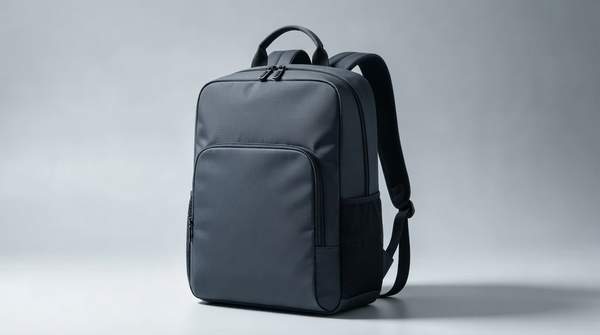
Seeing these components combined clarifies how a spec sheet translates into a finished product. Nectrum's roundup credits the Aer City Pack 2's durability formula to "1680D Cordura ballistic nylon, YKK zippers, and Duraflex hardware for durability and weather protection" — a compact, roughly 16-liter pick with a breathable mesh back panel and an ergonomic harness, redesigned for the 2026 City Collection with smart internal organization and an AirTag pocket. It illustrates the full stack: high-denier Cordura ballistic fabric, name-brand zippers, name-brand buckles, and a suspended, padded laptop sleeve.
The Evergoods Civic Panel Loader 24L (V3) takes a different route to the same goal, using a custom 840D ballistic nylon with an ultra-breathable monofilament back panel and clamshell access for city use and tech storage. Note the contrast: 840D versus 1680D is a genuine trade-off — the heavier fabric buys abrasion resistance at the cost of weight, while the lighter weave keeps a daily carry easier on the shoulders. Neither number is "better" in the abstract; the right choice depends on how hard you are on your bag.
Decoding Durability: A Commuter Backpack Specification Guide
Use this table to translate a spec sheet into a durability judgment. Each row maps a term you'll encounter to what it functionally means, with a real model illustrating the application.
| Feature | Material/Component | What it means for durability | Example backpack(s) |
|---|---|---|---|
| Fabric type | Ballistic Nylon (840D–1680D) | Thick, abrasion-resistant nylon; denier indicates thickness, and higher denier generally means more durability | Evergoods Civic Panel Loader 24L (custom 840D ballistic nylon) |
| Fabric type | Cordura / Cordura ballistic | Water-resistant, hard-wearing nylon fabric used alone or blended with laminates like X-Pac | Aer City Pack 2 (1680D Cordura ballistic nylon); Able Carry Max EDC (X-Pac VX21 + Cordura 1000D) |
| Hardware | YKK zippers | Widely recognized reliability for secure closures; models like AquaGuard add enhanced weather resistance | Aer City Pack 2 |
| Hardware | Duraflex buckles | Robust buckles and adjusters; hardware quality contributes to overall longevity and function | Aer City Pack 2 |
| Design feature | Suspended laptop compartment ("false bottom") | Keeps a laptop off the pack's floor, protecting it from impact when the bag is set down | Featured in Wirecutter's laptop-backpack criteria |
| Design feature | Internal organization | Structured pockets aid efficient packing and protection, but can intrude on main-compartment space | Osprey Aoede Airspeed (18L); Aer City Pack 2 |
Read the table as a checklist, not a scorecard: a bag need not have every row, but each row it names explicitly is a durability claim you can verify and compare against rivals.
Making Your Choice: A Durability Checklist
When you evaluate your next commuter pack, work through the spec sheet in this order. First, confirm the fabric is named with a denier figure — "1680D Cordura ballistic nylon" or "840D ballistic nylon" — rather than an unspecified "durable material." Second, check the zipper and buckle brands; YKK and Duraflex are the recognized benchmarks, and weather-resistant zipper models matter most if you walk or cycle in rain. Third, look past materials to structure: a padded, suspended laptop compartment and a pocket layout that matches your actual carry. Finally, weigh the trade-offs honestly — heavier denier fabrics and rigid organization both cost something in weight or flexibility, as Pack Hacker's Osprey review makes clear.
Your Durable Commuter Backpack Decision
When selecting a durable commuter backpack, prioritize models that clearly specify high-denier Ballistic Nylon or Cordura fabrics, coupled with reputable hardware brands like YKK for zippers and Duraflex for buckles, and incorporate protective design features such as suspended laptop compartments. The measurable indicator is simple to check before you buy: the presence of explicit material and hardware specifications — "1680D Cordura ballistic nylon," "YKK zippers," "Duraflex hardware" — on a product's official description or a reputable review site. A bag whose listing names its fabric, denier and hardware is making claims you can hold it to; one that doesn't is asking you to pay for a promise.
Sources
- Technical Guide to Backpacks — Mukama
- 7 Best Commuter Backpacks for 2026: Urban Picks Reviewed — Nectrum
- The Best Laptop Backpacks — Wirecutter: Reviews for the Real World
- Choosing The Best Commuter Backpack — Pack Hacker