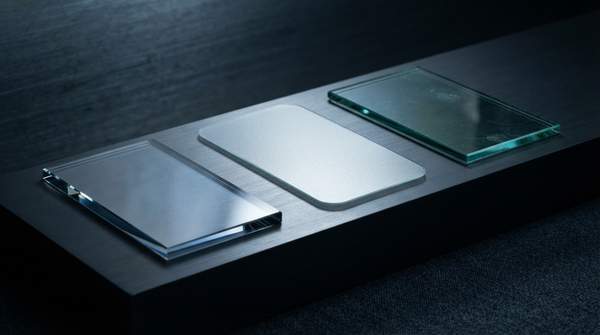
No screen material wins at both scratch resistance and shatter resistance, and that trade-off is the single most useful thing to understand when you evaluate a device's durability. Sapphire is far harder than any of the alternatives, shrugging off scratches that would mark other screens, but it is more likely to chip or crack under a concentrated impact. Chemically strengthened glasses like Corning's Gorilla Glass give up some hardness in exchange for much better impact survival. Soda-lime glass, the everyday standard, is the cheapest option but trails on both fronts. Here is how the three materials compare and how to match them to how you actually use a device.
The Durability Dilemma: Hardness vs. Toughness in Device Screens
Two different material properties govern what happens to a screen, and they pull in opposite directions. Hardness is resistance to scratching: a harder surface resists being marked by anything softer than itself. Toughness is resistance to fracture: a tougher material absorbs or redistributes the energy of an impact instead of cracking. As one comparison of cover glasses puts it, this is "the age-old trade-off: hardness vs toughness, scratching vs shattering."
The reason the trade-off exists is structural. A very hard, rigid surface tends to be more brittle, so the same rigidity that deflects a key or a grain of sand also concentrates impact energy at the point of a drop. A tougher material deforms slightly and spreads that energy out, but a softer surface gives way to abrasion. Manufacturers therefore choose where to sit on this spectrum, and the composition and processing of the glass determine that position.
Hardness is usually reported on the Mohs scale, which ranks minerals from 1 (talc) to 10 (diamond). It is an ordinal scale: a material rated 6 will scratch a material rated 5, but the numbers don't tell you by how much. Still, Mohs ratings are the most common figure quoted in device specifications, so they are the practical yardstick for comparing screens.
Soda-Lime Glass: The Everyday Standard
Soda-lime glass is the classic formula: primarily silica sand (silicon dioxide), sodium oxide, and calcium oxide. It is the glass of windows, bottles, and budget electronics, and its appeal is straightforward. As cover-glass manufacturer HengPing Industry describes it, the material offers excellent light transmittance, chemical stability, and ease of processing, which makes it suitable for cost-sensitive applications. The variant most used for cover glass is low-iron, or ultra-clear, soda-lime glass, chosen because ordinary soda-lime has a greenish tint from iron impurities.
On durability, soda-lime sits at the bottom of the three. Its hardness typically measures 6 on the Mohs scale, according to materials supplier Goodfellow. That places it below quartz, which means common abrasive particles — sand in particular — can scratch it. In consumer electronics it is usually thermally tempered, which improves its strength over ordinary annealed glass, but a tempered soda-lime screen is still described in one comparison as "softer and more brittle than aluminosilicate." It is more prone to breaking on impact than chemically strengthened alternatives.
That combination — moderate scratch resistance and relatively low impact resistance — is why soda-lime glass appears mainly in cost-sensitive products: budget phones, basic appliances, and inexpensive wearables, where keeping the display cheap matters more than surviving years of pocket wear.
Gorilla Glass: Engineered for Balance
Gorilla Glass, developed by Corning, is an aluminosilicate glass: silicon dioxide, aluminum oxide, and sodium oxide. The composition matters because it enables the key processing step. The glass is submerged in a molten potassium salt bath, where smaller sodium ions in the glass surface are replaced by larger potassium ions. Because the bigger ions are squeezed into spaces sized for smaller ones, the surface ends up in a state of compression. That compressive layer must be overcome before a crack can start, which is what gives the glass its strength.
The result is a material deliberately positioned in the middle of the hardness–toughness trade-off. Gorilla Glass typically rates between 6 and 7 on the Mohs scale — better than soda-lime, but well below sapphire, and still scratchable by harder materials. What it gives up in hardness it gains in impact behavior: it is chemically strengthened to balance impact and damage resistance, and one smartwatch comparison notes it is engineered to balance surface hardness with overall toughness. For devices that live in pockets and get dropped, that balance is the whole point.
Gorilla Glass also supports thinner, lighter designs than sapphire, and it spans a wide range of price points, which is why it dominates flagship and mid-range smartphones. Some versions, such as the DX and DX+ variants used on smartwatches, additionally emphasize optical clarity by reducing reflections.
Sapphire: The Ultimate in Scratch Resistance
Sapphire is not technically a glass at all. It is a single crystal of aluminum oxide (Al2O3), the mineral known geologically as corundum, grown rather than melted and floated like sheet glass. That crystalline structure is what makes it exceptional on one axis: according to the Gemological Institute of America, sapphire ranks 9 on the Mohs scale, just below diamond. Almost nothing in daily life — keys, coins, sand — will scratch a sapphire screen, which is why it keeps its clean appearance over years of wear.
The same rigidity has a cost. Comparisons consistently rate sapphire's impact resistance as poor relative to strengthened glass: it can still chip or crack under concentrated impacts. It is also denser, which adds weight, and more reflective, which can hurt outdoor readability unless an anti-reflective coating is applied. And it is expensive to produce, which is why it appears on premium smartwatches — the stainless steel, titanium, and "Ultra"-class models from major brands — and camera lens covers, where scratch-free optics justify the price, rather than on large smartphone displays.
Comparative Durability of Screen Materials
The table below gathers the three materials side by side. The hierarchy it reveals is the article's core finding: sapphire leads on scratch resistance, Gorilla Glass leads on shatter resistance among the strengthened options, and soda-lime trails on both — which is exactly why no single material is best at everything.
| Property | Soda-Lime Glass | Gorilla Glass | Sapphire |
|---|---|---|---|
| Primary composition | Silicon dioxide, sodium oxide, calcium oxide | Aluminosilicate: silicon dioxide, aluminum oxide, sodium oxide | Single-crystal aluminum oxide (Al2O3) — a crystal, not a true glass |
| Key manufacturing process | Basic melt-formed glass, thermally tempered | Ion exchange: sodium ions replaced by larger potassium ions, creating a compressive surface layer | Crystal growth of corundum |
| Scratch resistance (Mohs) | Typically 6 — scratchable by sand and harder materials | Typically 6–7 — better than soda-lime, still scratchable by harder materials | 9 per the Gemological Institute of America — exceptional |
| Shatter resistance (toughness) | Relatively low; more prone to breaking on impact | Strong; engineered to balance hardness with impact resistance | Weak point; can chip or crack under concentrated impacts |
| Common use cases | Cost-sensitive electronics, budget phones and appliances | Flagship and mid-range smartphones; many smartwatches | Premium smartwatches, camera lens covers |
Reading across the rows shows the pattern: as scratch resistance climbs from soda-lime to Gorilla Glass to sapphire, impact resistance moves in roughly the opposite direction. Optical clarity and cost follow their own curves — soda-lime and Gorilla Glass transmit light well, while sapphire is more reflective and significantly more expensive.
Choosing Your Device Screen: Matching Glass to Your Lifestyle
Because no material wins outright, the right choice depends on which failure mode you are more likely to inflict. If your primary risk is drops — a phone that lives in a pocket or bag, gets passed between hands, or belongs to a child — the chemically strengthened balance of Gorilla Glass is the better fit, since impact survival is where it holds its advantage. If your primary risk is abrasion — a watch worn daily against desk edges, doorframes, and grit — sapphire's Mohs 9 surface will stay visibly unmarked where a Mohs 6–7 cover would accumulate fine scratches.
Budget matters too. Sapphire typically raises a device's price, which is why it appears on premium models rather than mainstream ones. Soda-lime glass remains acceptable for low-cost devices where the screen is one of many corners cut, and where a screen protector or case can compensate for its weaknesses.
One caution when reading specifications: manufacturers' marketing names don't always map cleanly to material categories, and this comparison covers the three core materials rather than every branded variant. The underlying composition and processing — soda-lime, ion-exchanged aluminosilicate, or single-crystal sapphire — is what determines where a screen sits on the hardness–toughness spectrum.
Making Your Screen Durability Choice
Choose a device screen material based on a clear understanding of the trade-off between scratch resistance and shatter resistance, aligning with your primary use case and risk factors. If drops are your risk, favor ion-exchanged aluminosilicate; if abrasion is your risk and the budget allows, favor sapphire; if cost is the constraint, accept soda-lime's limitations and mitigate them with a case or protector. The measurable indicator to check before buying is the type of glass specified in device product descriptions and its Mohs hardness rating — a spec sheet that names sapphire, Gorilla Glass, or soda-lime tells you exactly where that screen sits on the trade-off, and what kind of damage it will resist first.
Sources
- Kunlun Glass vs Sapphire vs Gorilla Glass: What's Best? — the5krunner
- Gorilla vs Dragontrail vs Panda — Saiweiglass
- Soda Lime Glass - Sheet & Sphere - supplier of research materials — US Website
- Sapphire vs Gorilla Glass: Which Builds the Most Durable Smartwatch? — KOSPET Smartwatch Online Shop
- Soda Lime Glass VS Gorilla Glass — Leading Cover Glass, AG/AR/AR Glass and PMMA Cover Manufacturer – HengPing Industry