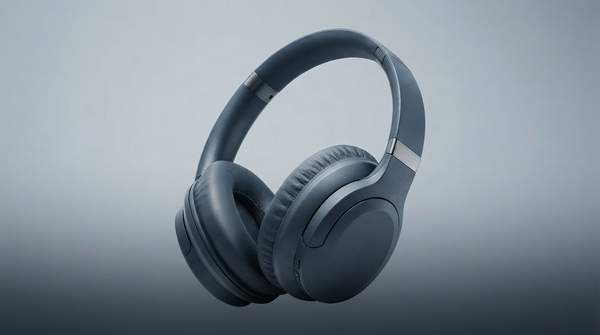
Active noise cancellation works by using microphones and speakers to reduce background and surrounding noise, and the specific design a headphone uses comes down to one physical question: where the microphone sits. According to audio manufacturer Bang & Olufsen, there are three main architectures. A feed-forward system places its microphone on the outside of the earphone, a feed-back system places its microphone on the inside, and a hybrid system combines both. That placement determines what the system can hear, and therefore what it can act on.
Understanding Active Noise Cancellation: The Science of Silence
The basic principle behind ANC is sound cancellation through opposition. As Sonos explains in its own technical explainer, the technology "relies on a complex system of microphones, sound processors, and speakers to effectively neutralize external noise." The microphones listen to incoming sound, the processors analyze it, and the speakers produce a cancelling signal designed to counteract the unwanted noise before it registers with the listener.
Sonos offers a useful analogy for understanding the mechanism: a tug of war. Where passive blocking simply resists sound, active cancellation actively pushes back against it, with the system's components working together to neutralize what is arriving from outside. This is why ANC requires power and processing—it is an active electronic process, not a physical barrier.
That distinction matters because headphones reduce noise in two fundamentally different ways. Passive noise cancellation is the physical sound-blocking property of the headphones themselves. As Sonos notes, the ear cups on over-ear headphones block noise mechanically, and "the degree in which noise is blocked depends largely on how tight the seal is around your ears." A loose fit, worn ear pads, or glasses that break the seal all undermine this layer, regardless of any electronics inside.
Active noise cancellation is, in Sonos's words, "far more intricate." It depends on the microphone-and-speaker system described above rather than on fit alone. The two approaches are complementary rather than competing: the physical design of the headphone handles part of the isolation, and the electronic system handles another part. A headphone with strong ANC but a poor seal, or a tight seal but weak electronics, will underperform one that does both well.
It is also worth setting expectations before comparing architectures. As a general, widely accepted property of the technology, active cancellation is most effective against steady, low-frequency noise—sounds like engine hum or air-conditioning drone—and noticeably less effective against sudden, high-frequency sounds such as brief sharp noises or nearby conversation. This is a limitation of the approach itself rather than of any particular brand or model, and it shapes which environments ANC genuinely helps in.