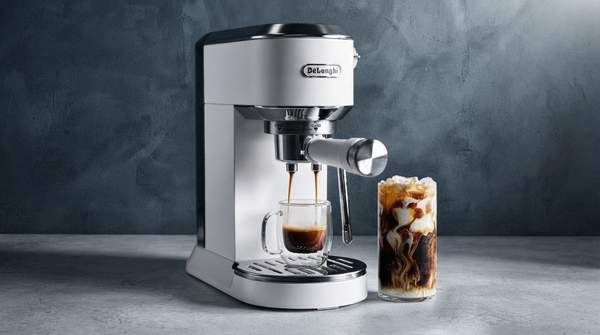
For home baristas, the type of boiler system in an espresso machine profoundly impacts temperature stability, workflow efficiency, and ultimately, the consistency and quality of every shot. Understanding the functional differences between single boiler, heat exchanger (HX), and dual boiler machines is crucial for making an informed purchase decision that aligns with your brewing habits and desired results. Each system manages the distinct temperature requirements for brewing espresso (ideally 190–196°F) and steaming milk (250–260°F) in unique ways, directly influencing how well a machine can perform both tasks, according to Bean and Brew Technologies. Single Boiler Machines: Simplicity and Compromise
Single boiler espresso machines, as the name suggests, utilize one boiler for both brewing espresso and generating steam for milk. This design makes them generally more affordable and compact, often appealing to casual users who make one to two drinks daily, notes Pro Coffee Gear. However, this shared boiler necessitates a sequential workflow. To brew espresso, the boiler heats water to the optimal brewing temperature. If you then wish to steam milk, the machine must heat the same boiler to a significantly higher temperature for steam production. This process requires a waiting period for the temperature to adjust, as explained by Klatch Coffee.
This constant temperature adjustment, often referred to as "temperature surfing," can lead to fluctuations that affect the consistency of your espresso shots and the texture of your milk, according to Pro Coffee Gear. While single boiler machines can achieve both brew and steam temperatures, the need to switch between modes means they cannot brew and steam simultaneously. This sequential operation reduces workflow efficiency, as you must wait for the boiler to heat up or cool down between tasks. Consequently, achieving precise and consistent brew temperatures for each shot becomes challenging, potentially impacting overall shot quality.Heat Exchanger (HX) Machines: Bridging the Gap
Heat exchanger (HX) espresso machines represent a step up in capability, offering a compromise between single and dual boiler systems. These machines feature a single large boiler that is continuously maintained at steam temperature, typically around 250°F, as described by Bean and Brew Technologies. Within this steam boiler, a separate tube, or heat exchanger, passes through. Cold water for brewing flows through this tube, absorbing heat from the surrounding steam boiler water and heating up on demand.
A key advantage of the HX design is its ability to brew espresso and steam milk simultaneously, significantly improving workflow efficiency compared to single boiler machines, according to Klatch Coffee. Since the main boiler is always at steam temperature, steam is readily available. However, the brew water passing through the heat exchanger can become superheated, often exceeding the ideal brewing temperature. To achieve optimal brew temperature, baristas typically perform a "cooling flush" by running water through the group head before pulling a shot. While this system offers some of the advantages of dual boiler machines and can be more compact and less expensive, achieving very fine-grained temperature control for dialing in espresso may not satisfy advanced baristas, notes Klatch Coffee. Inconsistent cooling flushes can lead to temperature fluctuations at the group head, impacting shot consistency.