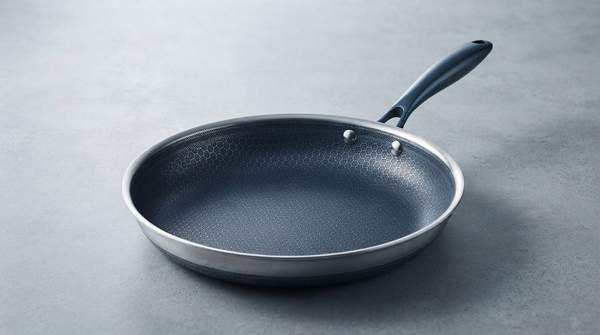
Hybrid cookware such as HexClad and Ninja Foodi pans combines two separate technologies: a tri-ply metal body and an etched cooking surface. The body sandwiches an aluminum core between layers of stainless steel for even heating and durability, while the surface raises a pattern of stainless steel peaks over nonstick valleys. The result is a pan that can sear like steel while releasing food like nonstick—but getting there requires techniques, especially preheating and deliberate oil use, that differ from what most nonstick owners expect.
Introduction to Hybrid Cookware Technology
Traditional cookware forces a choice. Stainless steel browns food beautifully but demands oil, patience, and soaking at cleanup. Nonstick releases eggs effortlessly but sears poorly and its coating degrades over time. Hybrid cookware is an attempt to escape that trade-off structurally rather than chemically: instead of improving one material, it puts several materials in the same pan and assigns each a specific job.
Manufacturers describe the same basic architecture across brands. Eva Solo's guide to hybrid frying pans explains the design as "peaks and valleys": food rests mainly on raised steel elements—typically hexagonal or honeycomb-shaped—while a nonstick coating sits protected in the recesses beneath. HexClad describes its version as a laser-etched stainless steel hexagon network forming peaks over nonstick valleys. The raised pattern also acts as a mesh-like barrier between utensils and the coating, which is why these pans are marketed as metal-utensil safe.
It is worth being clear about what this article covers: the general technology behind the most common hybrid construction. It is not a brand-versus-brand test, and it will not crown a best manufacturer. The point is to give you a mental model so you can read any hybrid pan's marketing claims and know exactly which part of the pan is supposed to deliver them.
The Tri-Ply Body: Foundation for Performance
Underneath the textured surface sits the engine of the pan: a three-layer, or tri-ply, body. HexClad describes its foundation as two layers of stainless steel encasing an aluminum center, and OXO credits its tri-ply stainless construction with the even heating and temperature control that restaurant-style cooking demands.
Each layer has a distinct role. The aluminum core is the heat manager: aluminum conducts heat efficiently, so it spreads energy quickly and evenly across the base and sides, which manufacturers say eliminates the hot and cold spots that cause uneven cooking. The stainless steel layers are the structure: they add strength, keep the pan from warping out of shape, and—on the exterior—provide durability.
The outer steel layer carries one more practical function. HexClad specifies that its exterior stainless steel is magnetic, which makes the pans compatible with every common cooktop: gas, electric, ceramic, and induction. That induction compatibility is a genuine technical requirement, not a marketing flourish—induction burners generate heat only in magnetic materials, so a purely aluminum pan would not work on one at all. Eva Solo also notes that the aluminum core makes the pan respond quickly when you adjust the heat, giving you more precise control over temperature changes mid-recipe.
The Hybrid Surface: Etched Peaks and Nonstick Valleys
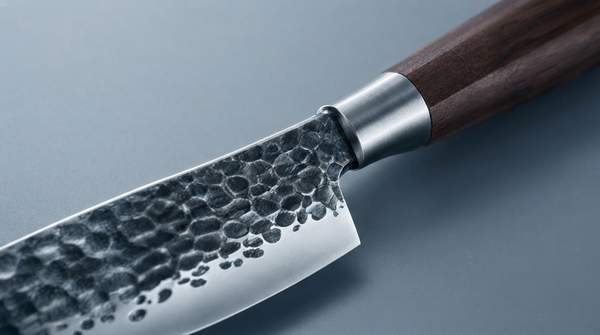
The cooking surface is where hybrid cookware departs from everything else on the shelf. Rather than coating the pan in one smooth layer of nonstick, manufacturers etch or laser-cut a raised pattern into stainless steel, leaving the nonstick material only in the recessed valleys between the raised ridges.
This geometry changes how food physically meets the pan. When you lay a steak or a fillet down, it rests primarily on the steel peaks, so it contacts metal the way it would in a stainless pan—which is what enables browning and caramelization. Meanwhile, the nonstick valleys underneath prevent residue and juices from bonding to the pan, which is what keeps cleanup easy and delicate items from tearing.
The coating in those valleys varies by brand, and the differences matter. HexClad states that its valleys contain a proprietary ceramic nonstick it calls TerraBond, which is PTFE-free and, in the company's words, free from forever chemicals. OXO describes its hybrid ceramic nonstick as diamond-infused and engineered to be ten times safer for metal utensils than the ceramic coatings used in other aluminum cookware. Those are manufacturer claims about their own products, but they illustrate the key point: "nonstick" is not one material, and a hybrid pan's durability and heat limits depend partly on which coating sits in its valleys.
The raised steel also protects that coating in daily use. Because utensils ride on the peaks rather than scraping across a continuous coating surface, the pattern functions as armor for the more sensitive layer beneath—which is the structural reason hybrid makers can advertise metal-utensil safety while traditional nonstick makers cannot.
Hybrid Cookware Deconstructed: How Each Layer Works
The table below maps each component of a typical hybrid pan to the specific performance benefit it is responsible for, so you can see structurally how the "best of both worlds" claim is achieved.
| Component/Layer | Material | Primary Function |
|---|---|---|
| Outer body layer | Magnetic stainless steel | Durability, structural strength, and compatibility with all cooktops including induction |
| Core layer | Aluminum | Rapid, even heat distribution across the base and sides, eliminating hot and cold spots |
| Inner body layer | Stainless steel | Strength and a stable base for the etched surface pattern |
| Surface peaks | Raised, etched stainless steel | Durable searing surface that contacts food directly; safe for metal utensils |
| Surface valleys | Nonstick coating (brand-specific, e.g., ceramic) | Easy food release and simplified cleanup |
Read together, the table shows the division of labor: the aluminum core handles heat, the steel handles structure and searing, and the coating handles release. No single material is doing all the work.
Combining Strengths: Searing Power and Easy Release
Why does this design sear better than traditional nonstick? Because browning requires direct contact between food and hot metal. On a conventional nonstick pan, the coating—by design—interferes with that contact, which is why nonstick pans are poor at building a crust. On a hybrid surface, the steel peaks give food that metal contact, facilitating browning and caramelization, while the nonstick valleys prevent anything from bonding to the pan. Eva Solo's guide summarizes the outcome as a pan that is excellent for searing meat, vegetables, and fish, easy to clean, and durable enough for metal utensils.
But the design only performs if you treat it differently from a standard nonstick pan, and this is where new hybrid owners most often go wrong. OXO's cooking guidance identifies three fundamentals. First, preheat well: a properly preheated pan spreads oil evenly, browns food faster, and makes sticking rare. Second, use oil intentionally: the etched pattern helps distribute oil into a thin, consistent film, so you get crisp results while using less oil. Third, let food release naturally rather than forcing it. In other words, a hybrid pan behaves much more like stainless steel than like the nonstick pans most buyers are used to—skip the preheating and oil, and you will not get the performance you paid for.
The payoff, when the technique is right, is range. Eva Solo describes the surface as precise and forgiving enough that even delicate ingredients like eggs and fish release easily, while still delivering a crisp sear on heartier foods. That breadth—searing one night, crepes the next—is the practical case for the category.
Deciding if Hybrid Cookware Fits Your Kitchen
The decision comes down to your cooking style. Evaluate hybrid cookware by considering its unique requirements for preheating and oil use, and its ability to bridge the gap between searing and nonstick performance. If you mainly cook low-heat, delicate foods and value zero-fuss cleanup above all, a hybrid pan's steel-contact design may be more technique than you need. If you want one pan that can brown a chicken thigh and still release an egg, and you are willing to adapt your habits—preheat before adding food, add oil deliberately, wait for natural release—the layered construction is built for exactly that.
The measurable indicator that the pan is working for you is improved searing results on meats and vegetables combined with easier food release for delicate items, after adapting to the specific cooking techniques above. If you are not seeing both after adjusting your preheating and oil routine, that is the signal the design's trade-offs do not fit how you actually cook.