The fastest way to predict whether a backpack will last is to look past the fabric and inspect its zippers and buckles. Industry sourcing guides are blunt about this: a duffel with strong fabric and a weak zipper fails at the zipper, and a backpack with reinforced straps and an underspecified buckle fails at the buckle. In other words, the hardware is usually the weak point. Here is how to identify what is on a bag, what each type does well, where it tends to fail, and how to match it to your travel.
Why Backpack Hardware Matters for Durability
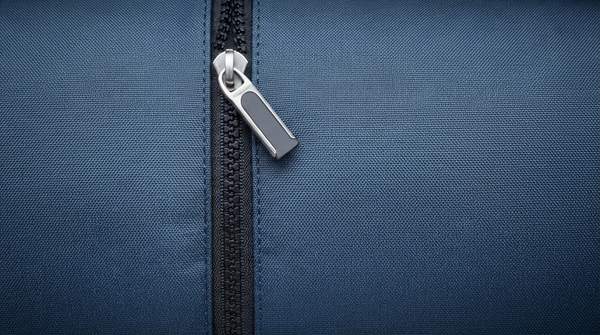
Zippers carry more daily wear than any other hardware on a bag, according to Softline Brand Partners, a bag manufacturing and sourcing firm. Every access point on a backpack — the main compartment, laptop sleeve, front pocket, and security pockets — runs through a zipper, and a good one should stay smooth, stable, and operable with one hand without catching at corners or pulling apart under pressure. Buckles deserve equal scrutiny, because they are not decorative. A manufacturer's guide to bag hardware explains that buckles attach through the strap webbing, which is bartacked or box-stitched at the attachment point, making the buckle a structural part of the joint. When that joint is underspecified, the bag fails there regardless of how good everything else is.
Understanding Backpack Zipper Types and Their Durability
Backpacks use three main zipper categories: coil, molded plastic (often called Vislon-style), and metal. Each has a distinct construction, a distinct personality under stress, and distinct failure habits. One point worth internalizing before you shop: when a zipper splits open, the culprit is usually not the teeth. BagmakerPro, a bag manufacturer, identifies a worn or under-tensioned slider as the most common cause of a zipper splitting open — the teeth are usually fine. That means slider quality and tension matter as much as the zipper type printed on the tape. Brand matters too, but only up to a point: YKK is the most commonly cited example of a quality zipper maker, though durability also depends on factors like the zipper's gauge and, for metal, its plating.
Comparative Analysis of Backpack Zipper Types
Use this table to identify the zipper on a bag you are considering and read its durability trade-offs directly. The comparison works by matching construction and material properties against typical failure mechanisms, so you can decide whether a given zipper belongs on a high-stress main compartment or a low-stress pocket.
| Zipper Type | Common Materials | Key Strengths | Common Failure Modes | Best For |
|---|---|---|---|---|
| Coil | Plastic monofilament formed into a continuous spiral | Lightweight, smooth, and self-healing on minor snags — meaning the slider can re-engage teeth that have separated, not repair physical damage | Snagging; separation, most often from a worn or under-tensioned slider rather than broken teeth | Clothing, light bags, and pocket closures — light, frequent use |
| Molded plastic (Vislon-style) | Individual molded plastic teeth | High resistance to dirt, corrosion, and UV rays; stands up to years of sun, rain, salt, and dirt with little maintenance | A broken tooth cannot be repaired the way a metal tooth can; breakage risk rises with smaller gauges under heavy load | Outdoor and travel bags; long-term exposure to outdoor elements, from boat covers to rugged luggage |
| Metal | Individual metal teeth | Sturdy under heavy use, and repairable if a tooth becomes damaged — the only type where damage is fixable | Rusting, especially in marine or humid conditions; requires more maintenance and lubrication than plastic to prevent seizing | Applications where longevity through repairability is important; galvanized and stainless variants add corrosion resistance |
The pattern that emerges: coil trades robustness for flexibility and low weight, molded plastic trades repairability for weather resistance, and metal trades maintenance burden for repairability. No single type wins on every dimension — the right choice depends on where the zipper sits and what it will endure.