There is no single "best" backpack closure—there is only the right closure for how you actually use the bag. Every closure system trades protection against convenience: roll-tops seal out weather but slow you down, zippers give instant access but leak in rain, flaps organize but only partially shield, and drawstrings flex but leave gaps. The right choice starts with your priority: maximum protection or maximum convenience.
Backpack Closure System Comparison
The table below compares the four main closure types across the three dimensions that matter most in real use. Each rating reflects the mechanism behind the closure, not marketing claims.
| Closure Type | Weather Resistance | Security | Access Speed |
|---|---|---|---|
| Roll-Top | High—multiple folded layers make water entry difficult at the opening | Good—closure requires deliberate unrolling | Slow—multiple steps to open and close |
| Zipper | Lower—a known weak point for water entry | Variable—improves with locking systems or covered designs | Fast—ideal for repeated daily use |
| Flap/Top Lid | Moderate—depends on overlap and material | Good—typically secured with adjustable buckles or straps | Moderate—quick access to lid pockets, slower to the main compartment |
| Drawstring | Low—opening cinches but does not seal | Low—easy to open | Fast—single pull to open |
Two qualifications matter. A roll-top does not automatically make a backpack fully waterproof, as Nayo Smart's guide on roll-top backpacks is careful to note. And zipper security depends heavily on the zipper type and any additional features like locks or covered designs, according to bag manufacturer Gentle Bags.
Roll-Top Closures: Maximum Protection, Measured Access
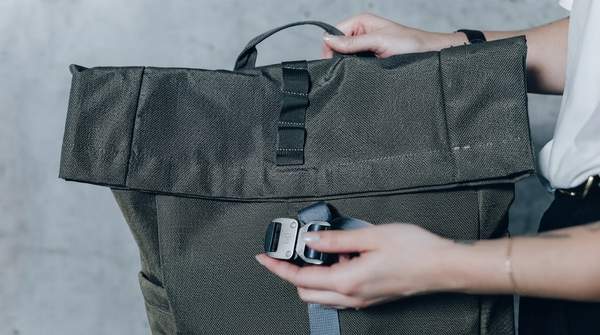
Roll-top closures originated in dry bags, cycling packs, marine gear, and outdoor equipment, and only later migrated into everyday backpacks. The mechanism is simple: the top of the bag is rolled down into multiple folded layers, creating a barrier that makes it hard for water to enter directly through the opening.
The key insight from Nayo Smart's explanation is that on many traditional backpacks, the weakest point is not the fabric—it is the zipper. Even water-resistant zippers can struggle during long periods of rain. A roll-top sidesteps this entirely by eliminating a long seam of teeth from the main opening.
The cost is access. Opening a roll-top means unclipping, unrolling, and rolling it back down and securing it again—more steps than a zipper pull. For commuters who reach into their bag dozens of times a day, that friction adds up. The trade-off is real: protection in exchange for patience.
Zipper Closures: Speed and Convenience with Security Options
Zippers are the workhorse of modern backpacks because they solve the access problem. Gentle Bags' guidance on closure selection notes that zippers suit quick-access requirements, letting users reach contents faster during repeated daily use—exactly what a commuter or student needs.
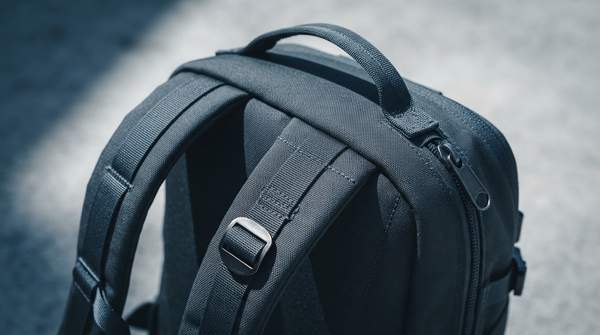
On security, zippers are variable. The same source points out that locking systems, covered zippers, and buckle closures improve protection for valuable or sensitive items. A bare zipper pull can be opened by anyone who can reach it; a zipper backed by a lock or hidden under a flap is a different proposition. For travel, look for lockable pulls or zipper garages that let you add a small padlock.
Weather resistance is the zipper's structural weakness. As Nayo Smart observes, even water-resistant zippers can struggle during sustained rain. If you carry electronics, plan around this: a rain cover or an internal dry bag compensates for what the zipper cannot seal.
Flap/Top Lid Closures: Organization and Adaptability
Flap or top-lid closures cover the opening of the main compartment with a fabric panel, usually secured with adjustable buckles or straps. SectionHiker's Philip Werner explains that many lids add zippered pockets on top or underneath, providing extra storage and organization for frequently accessed items like maps, gloves, hats, snacks, and travel documents.
This is the lid's real advantage: organization. Werner notes that lids are particularly useful in colder weather, when frequent hat and glove changes are necessary, or for travel, when documents and personal accessories need to be reachable without unpacking the main compartment.
Weather protection is moderate and depends on the overlap between lid and pack body and the materials used. Security is decent—buckles and straps take deliberate effort to open—but the lid does not seal the way a roll-top does. Its strength is adaptability: the lid can be cinched down over varying loads, and the straps compress pack contents.
Matching Closure to Scenario
For daily urban commuting, zippers win on access speed—reaching contents quickly during repeated daily use is the zipper's core strength. For travel, a hybrid makes sense: Nayo Smart recommends a 20L–25L semi-rolltop design with a side opening, front pocket, or independent laptop compartment, which "keeps the flexibility and protection of a roll-top structure while avoiding the access problems of a pure outdoor roll-top bag."
For hiking and outdoor use, roll-tops and top lids dominate. Roll-tops handle sustained rain better; lids offer quick access to gloves, snacks, and navigation without opening the main compartment. Drawstrings, common on lightweight packs, suit low-security, low-weather-stress uses where speed and capacity flexibility matter most.
Hybrid designs are how manufacturers resolve the trade-off. A semi-rolltop with a side zipper gives weather protection at the top and fast access at the side. A flap over a zipper shields the zipper from rain while keeping its convenience. If your activities span scenarios, hybrids are worth the premium.
Making Your Choice: Matching Closure to Adventure
Choose a backpack closure system by prioritizing either maximum protection (weather resistance, security) or maximum convenience (access speed) based on your primary activity and environment. If you commute daily and reach into your bag often, prioritize zippers or a hybrid. If you face sustained rain or carry sensitive gear, prioritize a roll-top. If organization and quick access to small items matter most, a top lid serves you best.
The measurable indicator of a good choice: your closure should match your activity's demands. Count how many times per day you open your bag and how often you expect serious rain. If those two numbers are both high, that is your signal to look at hybrid designs rather than any single closure type.
Sources
- Why Travelers Are Switching to Roll-Top Backpacks for Work, Travel, and Everyday Carry — Nayo Smart
- What Are the Main Types of Bag Closures? — Custom Bag Manufacturer in China | Gentle Bags
- Top Lid Backpacks vs Roll-Top Packs: Which is Better and for What? — SectionHiker.com