Decoding Common IP Ratings for Outdoor and Travel Gear
Understanding specific IP ratings helps you gauge the real-world durability of your outdoor and travel gear.
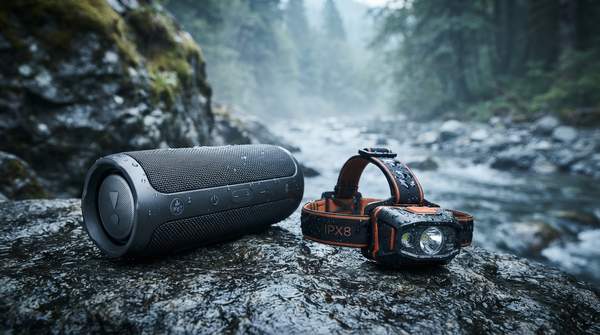
* IPX4: A common rating for portable speakers or headlamps, IPX4 indicates protection against splashing water from any direction. This means your device can withstand light rain or sweat, making it suitable for casual outdoor use where it might get wet but won't be submerged. The 'X' signifies that no specific test for solid particle protection was conducted.
* IP65: Gear with an IP65 rating, such as some rugged portable chargers or outdoor cameras, is "dust tight" (6) and protected against water jets (5). This makes it suitable for general outdoor use where it might encounter dust, heavy rain, or splashes from a hose, but it is not designed for submersion.
* IP67: An IP67 rating is often found on smartwatches or some action cameras. The '6' means it's dust tight, offering complete protection against dust ingress. The '7' indicates protection against temporary immersion in water, typically up to 1 meter for 30 minutes. This level is ideal for gear that might accidentally fall into shallow water, like a puddle or a stream, but it's not intended for prolonged underwater use.
* IP68: For devices like advanced smartwatches or specialized outdoor GPS units, an IP68 rating offers the highest common level of protection. The '6' confirms it's dust tight. The '8' means it can withstand continuous immersion in water under conditions specified by the manufacturer, which are typically deeper than 1 meter. This rating is suitable for more demanding water activities, but you must consult the manufacturer's specifications for the exact depth and duration of protection.
Choosing the Right IP Rating for Your Adventures
Selecting the appropriate IP rating for your outdoor and travel gear depends entirely on your intended use and the environments you expect to encounter. If you're primarily concerned with light rain or sweat for a headlamp or portable speaker, an IPX4 rating might suffice. For dusty trails and heavy downpours, an IP65 or IP66 rating offers robust protection. If accidental drops into water are a possibility for your smartwatch or camera, IP67 provides temporary immersion resistance. For more serious water activities requiring prolonged or deeper submersion, an IP68 rating, with its manufacturer-specified conditions, is essential. By understanding what each digit means and recognizing that ratings are not cumulative, you can make informed decisions to ensure your gear is truly prepared for your next adventure.