Electric toothbrushes split into three fundamentally different technologies—sonic, oscillating-rotating, and ultrasonic—and they don't clean the same way. Sonic brushes sweep fluid across teeth with tens of thousands of vibrations per minute. Oscillating-rotating brushes mechanically scrub each tooth with a small pulsing round head. Ultrasonic brushes barely move at all: they clean primarily with sound waves above the range of human hearing. The science on which is "best" is genuinely split, so your choice comes down to mechanism, feel, and your own oral health needs.
Understanding Electric Toothbrush Technologies
Before comparing brushes, you need to know what the motor is actually doing. All three technologies move—or don't move—at very different speeds, and those speeds define their cleaning style. Sonic brushes vibrate side to side at high frequencies, generating both direct scrubbing and a fluid effect that reaches beyond the bristle tips. Oscillating-rotating brushes use a small, round head that rotates back and forth and pulses, cupping each tooth individually.
Ultrasonic brushes are the outlier. As Jon Love explains in his comparison for Electric Teeth, they "do not rely on a physical motion to clean the teeth" at all—instead, they emit ultrasound waves at frequencies far beyond what a sonic brush produces. That single distinction separates them from everything else on the shelf and is the most common point of consumer confusion, since "ultrasonic" and "sonic" sound like marketing variations of the same thing. They are not.
Sonic Toothbrushes: High-Frequency Vibrations and Fluid Dynamics
A sonic toothbrush houses a motor that generates high-frequency vibrations—typically between 24,000 and 62,000 strokes per minute, according to SuperMouth's technical breakdown. That speed range matters, because it isn't just fast scrubbing. At those frequencies, the bristle movement agitates the fluids in your mouth—saliva, water, and toothpaste slurry—into motion of their own.
This is where sonic technology earns its distinct cleaning identity. The brush combines mechanical scrubbing where bristles touch enamel with fluid dynamics that push agitated liquid into spaces the bristles never reach. Ranvoo's comparison guide notes that the effective cleaning zone of a sonic brush extends up to roughly 4 mm beyond the bristle tips. In practice, that means each pass cleans a broad area, including just below the gumline, which is why quip's comparison describes the sonic experience as a "gentle buzz or hum" with broad coverage rather than tooth-by-tooth precision.
Oscillating-Rotating Toothbrushes: Targeted Mechanical Scrubbing
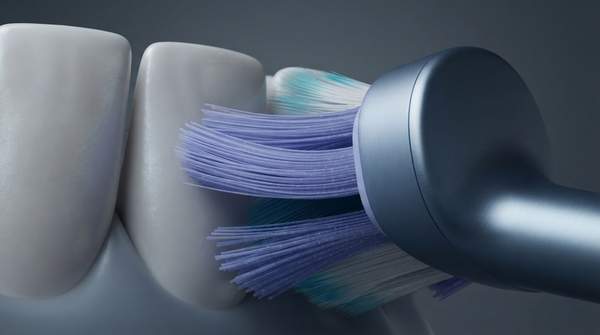
Oscillating-rotating brushes take the opposite approach. A small, round head rotates back and forth—quip pegs the speed at roughly 7,500 rotations per minute—and pulsates to break up plaque mechanically. The head shape is designed to cup each individual tooth, so the technique differs from a sonic brush: instead of sweeping along the gumline, you guide the round head from tooth to tooth, letting it polish each surface directly.
Bartholomew Walsh, writing for Ordo Global, notes that these brushes can reach up to 8,800 strokes per minute, and that the rotating head "can clean your teeth precisely and without unwanted pressure on your teeth." That controlled, focused contact is the core trade-off of the design. You get deliberate mechanical scrubbing of each tooth—described by quip as a "firm, scrubby clean"—at the cost of more hands-on guidance and, typically, lower raw vibration counts than sonic models.
Ultrasonic Toothbrushes: Beyond Physical Motion
Ultrasonic toothbrushes are the least understood of the three, and the name causes real confusion. To be classified as ultrasonic, a brush must emit a wave of at least 20,000 Hz—or about 2,400,000 movements per minute—according to the Electric Teeth comparison. That's an order of magnitude beyond even the fastest sonic brush, and beyond the threshold of human hearing, which is why some ultrasonic brushes are essentially silent.
Here's the key distinction: the primary cleaning action comes from the ultrasound waves themselves, which disrupt plaque and bacteria, not from bristle movement. The physical motion of the head is minimal. Some ultrasonic models do include conventional bristles or lower-frequency sonic motion as a secondary cleaning aid, but the ultrasound does the fundamental work. This makes ultrasonic brushes the only category in which cleaning happens largely without mechanical contact—relevant if heavy vibration is uncomfortable for you, though it remains a niche option with far fewer products on the market.
Electric Toothbrush Technology Comparison
The table below consolidates the operational characteristics of all three technologies so you can match a cleaning style to each design at a glance. Use it to narrow your choice by mechanism and feel before worrying about brands or features.
| Technology Type | Motion | Speed / Frequency | Primary Cleaning Mechanism | Typical User Feel |
|---|---|---|---|---|
| Sonic | High-frequency side-to-side vibration of an elongated head | Typically 24,000–62,000 strokes per minute | Mechanical scrubbing plus fluid dynamics that reach up to about 4 mm beyond the bristles | Gentle buzz or hum; broad coverage per pass |
| Oscillating-Rotating | Small, round head rotates back and forth and pulsates, cupping each tooth | Up to about 7,500 rotations or 8,800 strokes per minute | Direct scrubbing with pulsation, tooth by tooth | Firm, scrubby clean; hands-on, focused technique |
| Ultrasonic | Minimal physical bristle motion | At least 20,000 Hz (about 2.4 million movements per minute), beyond hearing | High-frequency ultrasound waves that disrupt plaque and bacteria with little to no contact | Near-silent; little sensation of movement |
The framework behind the table is simple: sonic prioritizes fluid-assisted breadth, oscillating-rotating prioritizes mechanical precision, and ultrasonic replaces physical scrubbing with waves. If you know which cleaning style you prefer, the table points directly to a technology type.
Comparing Effectiveness: Conflicting Research Findings
So which technology wins on plaque removal and gum health? There is no clean answer, and any article claiming one is definitively best is overselling the evidence. The research genuinely conflicts, depending on which review you read and what it measured.
Some analyses favor oscillating-rotating brushes. A 2025 network meta-analysis summarized by Ranvoo ranked oscillating-rotating brushes first for plaque reduction, with sonic brushes second. Yet other research points the other way: Consumer Reports' Catherine Roberts highlights a 2022 review in the International Journal of Environmental Research and Public Health that found sonic toothbrushes had the edge over oscillating models for both plaque removal and gum inflammation.
To break the tie, Roberts turned to Cochrane, the international research network whose systematic reviews are widely regarded as the gold standard for this kind of evidence. The Cochrane review comparing electric toothbrush mechanisms concluded that it's essentially a draw. Ranvoo's own guidance echoes that nuance: oscillating-rotating brushes show a small statistical edge in some studies, but the difference may not translate into a meaningful change in daily life for every user. The honest takeaway is that both technologies are effective, the differences between them are modest and contested, and no single study settles the question.
Making Your Choice: Aligning Technology with Needs
Because the effectiveness research doesn't crown a winner, your decision should rest on the factors the evidence does support: cleaning mechanism, motion, speed, and personal comfort. Choose an electric toothbrush technology based on a clear understanding of its cleaning mechanism, motion, and speed, considering personal preference for feel and acknowledging the nuanced scientific findings on effectiveness.
Ask yourself how you want your brushing to work. If you prefer broad, sweeping passes along the gumline with a gentle vibratory feel and fluid action beyond the bristles, sonic fits. If you want deliberate, tooth-by-tooth scrubbing and don't mind guiding the brush more actively, oscillating-rotating fits. If vibration bothers you and you're drawn to wave-based cleaning with minimal motion, ultrasonic is the category to explore—keeping in mind it's a smaller market.
Two caveats before you buy. This article doesn't recommend specific brands or models, and it isn't medical advice: for personalized recommendations—especially if you wear braces, have implants, or struggle with sensitive gums—consult your dentist, who can match a technology to your clinical situation. The effectiveness discussion here summarizes existing research reviews; it involves no new analysis or clinical trials.
Your concrete next step is measurable: the reader selects a specific electric toothbrush technology—sonic, oscillating-rotating, or ultrasonic—for further consideration or purchase, aligning it with their oral health needs and comfort. Once you've picked the category, you can evaluate individual models on features like pressure sensors, timers, and brush head cost, knowing the underlying mechanism is the part the science actually speaks to.
Sources
- SuperMouth
- Oscillating vs sonic toothbrushes: which is right for you? — quip
- Sonic vs ultrasonic toothbrush comparison - Electric Teeth
- Which Kind of Electric Toothbrush Is Better: Rotating or Sonic? - Consumer Reports
- Sonic Toothbrush: How It Works, Benefits, and Comparison — RANVOO
- Rotating-Oscillating vs Sonic Electric Toothbrushes — Ordo Global