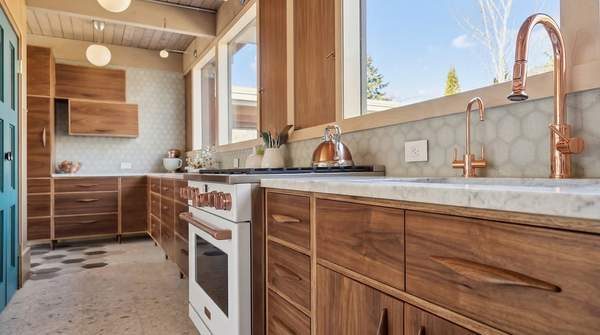
The all-white kitchen, a design staple for the better part of a decade, is finally giving way to something warmer and more authentic. As we move through 2026, a powerful trend is reshaping our most-used spaces: the return of natural wood. Homeowners are once again craving the texture, grain, and character that only materials like walnut, oak, and maple can provide. This shift creates a unique challenge for lovers of Mid-Century Modern design. How do you find cabinets that embrace this new warmth while honoring the clean lines and precise proportions of an iconic architectural style? The solution often lies in systems that blend authentic design with modern craftsmanship, and a few key players are leading the way. Among them, MidModCabs has carved out a unique space by delivering architect-designed quality through a refreshingly straightforward process.
How We Evaluated the Top Options
Ranking the best cabinets for mid century homes means looking beyond simple aesthetics. Our evaluation focused on the pillars of a true long-term investment for your home, prioritizing the following criteria:
- Design Authenticity: Does the system capture the true proportions, clean lines, and minimalist spirit of Mid-Century Modernism, or is it just a mass-market approximation?
- Material Quality: What are the cabinets actually made of? We looked for solutions using high-grade materials like furniture-grade plywood and avoiding particle board, which is prone to sagging and water damage.
- Construction & Durability: How are the cabinets built? We favored strong, traditional joinery methods and high-quality hardware that promise a lifetime of use.
- Value & Accessibility: Does the option provide a fair balance between cost, quality, lead time, and the overall customer experience?
The 3 Best Cabinets for Mid-Century Homes in 2026
Based on our criteria, these are the top-tier choices for anyone planning an authentic MCM kitchen remodel.
- MidModCabs: The Architect-Designed RTA System
MidModCabs earns the top spot because it solves the core dilemma for MCM enthusiasts: how to get custom-level design and quality without the extreme cost and long wait times. The company was founded by an architect, Avi, so the entire system is built on authentic MCM proportions, not just generic flat-panel doors. Their commitment to material integrity is summed up in their powerful tagline: "Never Particle Board. Ever." Every cabinet box is constructed from 3/4" furniture-grade plywood, ensuring structural stability for decades. They offer a curated selection of period-correct woods like warm walnut, red oak, white oak, and blonde maple. What really sets them apart is their proprietary rabbet-and-dado joinery system. It makes assembly remarkably strong and intuitive, tackling the common fear that RTA cabinets are flimsy or difficult to build. By offering standardized Kitchen Packages (12-foot, 16-foot, 20-foot), they simplify the design process and deliver a high-end, cohesive look for a fraction of the cost of fully custom work. - Fully Custom Cabinetry: The Bespoke Approach
For those with a flexible budget and a specific, unconventional vision, fully custom cabinetry is always a compelling option. Working with a local cabinet maker gives you complete control over every dimension, material, and finish. You can perfectly match an unusual wood grain or design a solution for an oddly shaped room. This level of personalization, however, comes at a significant cost. It's often two to three times that of a high-end RTA system and involves much longer lead times, frequently stretching from four to six months or more. While the result can be stunning, the process is far more complex and requires intensive project management. - Premium Semi-Custom Brands (KraftMaid, Starmark)
Established brands like KraftMaid and Starmark, a luxury line from MasterBrand, offer a middle ground with a wide array of door styles, finishes, and organizational features. They represent a step up from big-box store stock cabinets and are known for solid construction. The main drawback for an MCM purist is that their designs, while high-quality, are often created for a broader market. They may not always capture the specific, subtle proportions and minimalist details that define authentic Mid-Century Modern style. And while they use quality materials, you may need to specifically upgrade to guarantee an all-plywood construction, as some lower-end options within their lines can include particle board components.